
When Your Leg Pain Isn't "Just Age" and Requires a Specialist?
Dr Krunal Gohil
Many people assume that leg pain is a normal part of getting older. While occasional muscle aches or joint stiffness can occur with age, persistent or recurring leg pain should never be ignored. In some cases, it may be a sign of an underlying circulation problem, nerve disorder, or another medical condition that requires prompt evaluation. Knowing when to seek medical advice can help prevent complications and improve your quality of life.
Why Leg Pain Shouldn't Always Be Blamed on Aging?
As we age, our muscles, joints, and bones naturally undergo changes. However, pain that affects your daily activities, keeps returning, or worsens over time is not considered a normal part of aging.
If your leg pain is associated with walking difficulty, numbness, cold feet, or slow-healing wounds, it may indicate an issue with blood circulation rather than age-related wear and tear. Early diagnosis is the first step toward effective treatment.
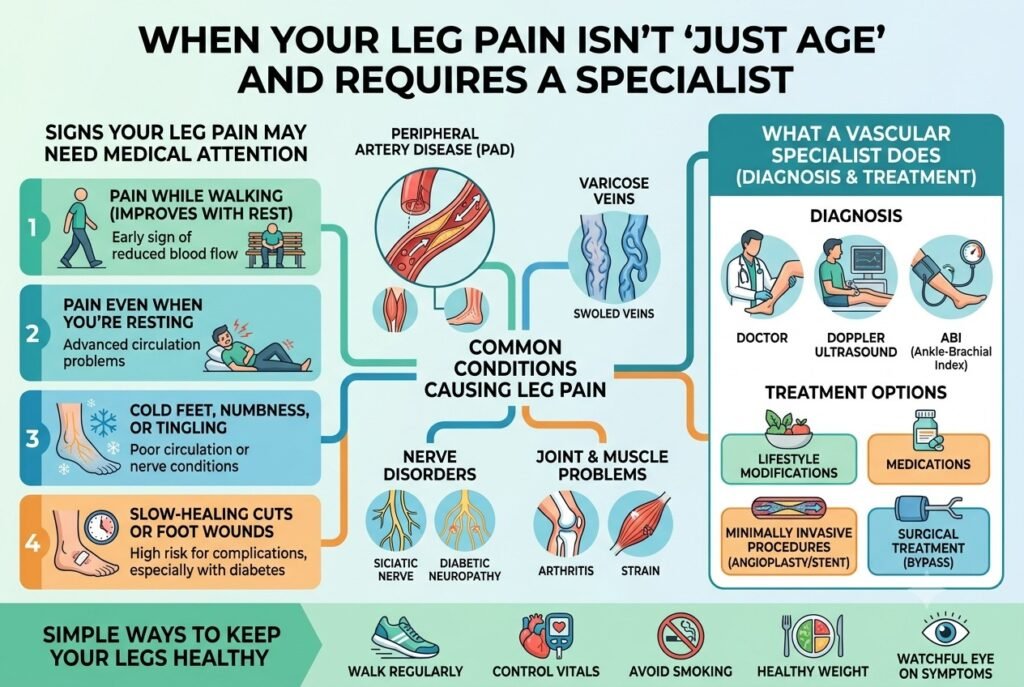
Signs Your Leg Pain May Need Medical Attention:
Recognizing the warning signs can help you seek care before the condition becomes more serious.
- Pain While Walking That Improves with Rest
Pain that starts after walking a certain distance and eases with rest may be an early sign of reduced blood flow to the legs. - Pain Even When You’re Resting
Persistent pain while sitting or lying down can indicate advanced circulation problems that require immediate evaluation. - Cold Feet, Numbness, or Tingling
Poor blood circulation or nerve-related conditions may cause your feet to feel unusually cold or numb. - Slow-Healing Cuts or Foot Wounds
Wounds that do not heal properly should never be ignored, especially if you have diabetes or other vascular risk factors.
Common Conditions That Can Cause Persistent Leg Pain
Several medical conditions can lead to ongoing leg discomfort.
- Peripheral Artery Disease (PAD)
PAD develops when arteries become narrowed due to plaque buildup, reducing blood flow to the legs. Common symptoms include pain while walking, cold feet, and delayed wound healing. Seeking timely PAD treatment can improve circulation, relieve symptoms, and reduce the risk of complications. - Varicose Veins
Enlarged veins can cause aching, heaviness, swelling, and discomfort, particularly after standing for long periods. - Nerve Disorders
Conditions such as diabetic neuropathy or sciatica may cause burning pain, tingling, or numbness. - Joint and Muscle Problems
Arthritis, muscle strain, and tendon disorders can also contribute to leg pain, especially with movement.
When Should You Consult a Specialist?
It is advisable to seek medical evaluation if:
- Your leg pain keeps returning or gradually worsens.
- Walking even short distances becomes difficult.
- Your feet become cold, pale, or change colour.
- You notice wounds that are slow to heal.
- You have diabetes, high blood pressure, high cholesterol, or a history of smoking.
An experienced vascular specialist can determine whether poor blood circulation is responsible for your symptoms and recommend the most appropriate treatment.
How Leg Pain is Diagnosed?
A detailed evaluation helps identify the exact cause of your symptoms.
- Physical Examination
Your doctor will assess blood circulation, pulses, skin changes, and overall leg health. - Doppler Ultrasound
This non-invasive test measures blood flow and helps identify narrowed or blocked arteries. - Ankle-Brachial Index (ABI) Test
The ABI compares blood pressure in the arms and legs to detect circulation problems. - Advanced Imaging
If required, CT angiography or other imaging tests may be performed to evaluate blood vessels in greater detail.
Treatment Depends on the Underlying Cause:
The right treatment varies depending on the diagnosis and severity of the condition.
- Lifestyle Modifications
Regular walking, a balanced diet, smoking cessation, and controlling diabetes can significantly improve vascular health. - Medications
Medicines may help manage cholesterol, blood pressure, diabetes, and reduce the risk of blood clots. - Minimally Invasive Procedures
For patients with reduced blood flow, modern PAD treatment options such as angioplasty and stenting can restore circulation without major surgery. - Surgical Treatment
Advanced vascular disease may require bypass surgery or other procedures to improve blood flow and preserve limb health.
Simple Ways to Keep Your Legs Healthy
Maintaining good vascular health can lower the risk of leg pain and circulation problems.
- Stay physically active with regular walking.
- Keep blood sugar, blood pressure, and cholesterol under control.
- Avoid smoking and tobacco products.
- Maintain a healthy body weight.
- Pay attention to any new or worsening leg symptoms.
These simple habits can help protect your circulation and support long-term mobility.
Know When It's Time to Seek Medical Care
Leg pain is not always a natural consequence of aging. Persistent discomfort, pain while walking, cold feet, or slow-healing wounds may indicate an underlying vascular condition that requires medical attention. Consulting a vascular specialist at the right time can help identify the cause early and prevent serious complications.
With timely diagnosis and appropriate PAD treatment, many patients can improve blood circulation, relieve symptoms, and continue leading an active and healthy life.