
Varicose Veins Prevention Tips
Strengthening Your “Second Heart” (Calf Muscles)
Dr Krunal Gohil
Simple Steps to Keep Your Legs Healthy and Veins Strong
Varicose veins are one of the most common vein-related problems affecting the legs. They often look like twisted, swollen veins that can be painful, heavy, or change the way the skin looks. A lot of people only see them as a cosmetic problem, but they are actually a sign of poor blood flow in the legs. The good news is that with simple lifestyle changes and awareness, the risk of developing varicose veins can be significantly reduced.
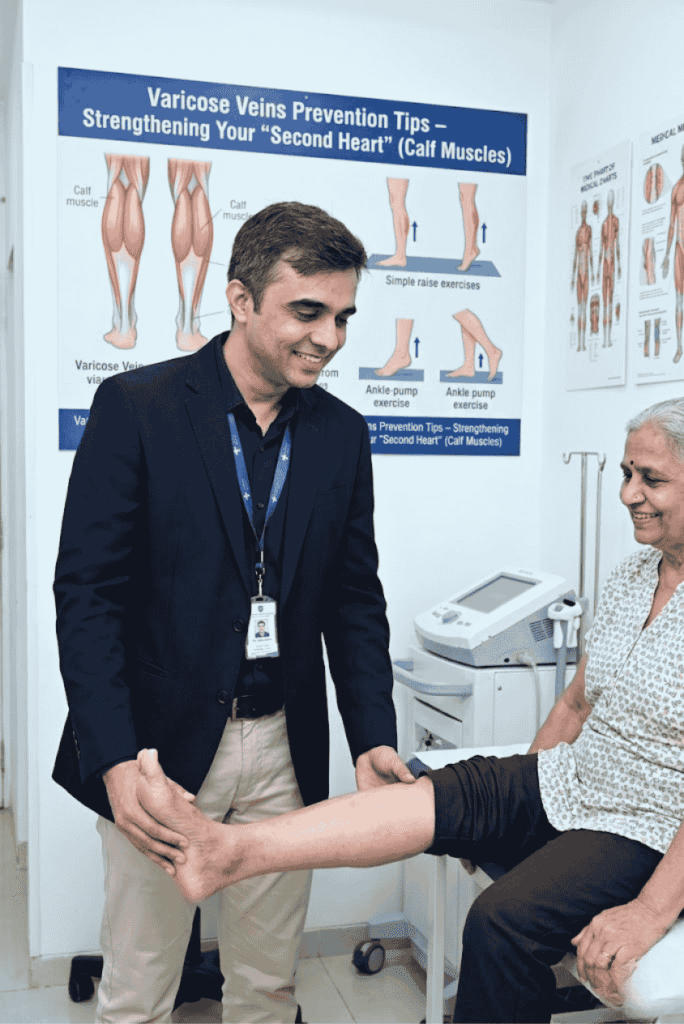
One of the most important yet often overlooked aspects of vein health is the role of calf muscles, also known as the “second heart.” These muscles play a key role in helping blood flow from the legs back to the heart.
Understanding Varicose Veins and Why They Develop
Varicose veins occur when the valves inside the veins become weak or damaged. These valves are responsible for keeping blood moving in one direction towards the heart. When they stop functioning properly, blood begins to pool in the legs, leading to swelling and enlarged veins.
This condition is more common in people who stand or sit for long hours, as well as those with a family history of vein disease. Over time, increased pressure in the leg veins can worsen symptoms if not managed early.
Why Calf Muscles Are Called the “Second Heart”
- Role of Calf Muscles in Blood Circulation
Calf muscles act like a pump. Every time you walk or move your legs, these muscles contract and push blood upward against gravity. - How They Push Blood Back Toward the Heart
This muscle activity supports venous return, ensuring blood does not remain pooled in the lower legs. - What Happens When Calf Muscles Are Weak
When calf muscles are inactive or weak, blood circulation slows down, increasing pressure in the veins and raising the risk of varicose veins.
Early Signs of Poor Vein Health
- Visible Bulging or Twisted Veins
One of the earliest signs is the appearance of enlarged blue or purple veins under the skin. - Heavy or Tired Legs After Activity
Many people feel discomfort or heaviness, especially after long standing hours. - Swelling in Ankles or Lower Legs
Fluid buildup can lead to noticeable swelling, especially by the end of the day. - Burning, Cramping, or Itching Sensation
These symptoms often indicate poor circulation and vein stress.
Best Calf Muscle Exercises for Varicose Veins Prevention
- Walking and Daily Movement
Walking is one of the simplest and most effective ways to activate calf muscles and improve blood flow. - Heel Raises and Toe Lifts
Standing on your toes and lowering slowly strengthens the calf muscle pump mechanism. - Leg Stretching Exercises
Stretching improves flexibility and supports better circulation in the lower limbs. - Ankle Rotation and Light Activity
Simple ankle movements help maintain continuous blood flow, especially during long sitting hours.
Lifestyle Habits That Support Healthy Veins
- Avoid Sitting or Standing for Long Hours
Taking short breaks to move around helps reduce pressure on leg veins. - Maintain a Healthy Body Weight
Excess weight increases pressure on the lower limbs and weakens circulation. - Wear Comfortable and Supportive Footwear
Proper footwear supports posture and reduces strain on calf muscles. - Keep Legs Elevated When Resting
Elevating legs helps blood flow back toward the heart and reduces swelling.
When Prevention Is Not Enough
If symptoms such as persistent leg pain, visible vein enlargement, or swelling continue to worsen, it is important not to ignore them. Early medical attention can prevent complications and improve long-term outcomes.
At this stage, consulting for varicose veins treatment can help manage the condition effectively and reduce the risk of progression.
Modern Treatment Options for Varicose Veins
- Compression Therapy for Symptom Relief
Special stockings help improve blood flow and reduce discomfort. - Laser and Minimally Invasive Procedures
Modern techniques can close affected veins with minimal recovery time. - Sclerotherapy for Smaller Veins
A medical solution is injected to close smaller varicose veins. - Surgical Options for Advanced Cases
In severe cases, surgical intervention may be recommended for long-term relief.
Advanced varicose veins treatment offers effective, minimally invasive solutions designed to improve comfort and restore quality of life.
How Strong Calf Muscles Protect Your Vein Health Long-Term
Strong calf muscles ensure continuous blood circulation and reduce pressure in the veins. When supported with regular movement and healthy habits, they significantly lower the risk of developing varicose veins in the future. Consistency is key; small daily efforts can make a lasting difference.
Conclusion: Small Habits for Lifelong Vein Health
Varicose vein prevention is not complicated. It begins with awareness, regular movement, and simple lifestyle changes. Strengthening your calf muscles, the “ second heart ” plays a crucial role in maintaining healthy circulation.
By staying active and paying attention to early signs, you can protect your legs, improve comfort, and reduce the risk of long-term vein problems.