
Open Up Blocked AV Fistula – “Save Your Veins for Long-Term Dialysis Success”
Dr Krunal Gohil
Early Detection and Treatment Can Restore Function and Prevent Access Loss
An AV fistula is one of the most important lifelines for patients undergoing long-term dialysis. It ensures smooth blood flow, efficient treatment, and reduced complications compared to other access methods. However, over time, an AV fistula can become narrowed or blocked due to clot formation, vessel narrowing, or repeated use. When this happens, timely treatment becomes crucial to restore function and protect long-term dialysis access. Understanding the problem early and taking the right steps can help prevent permanent damage and maintain a reliable dialysis pathway.
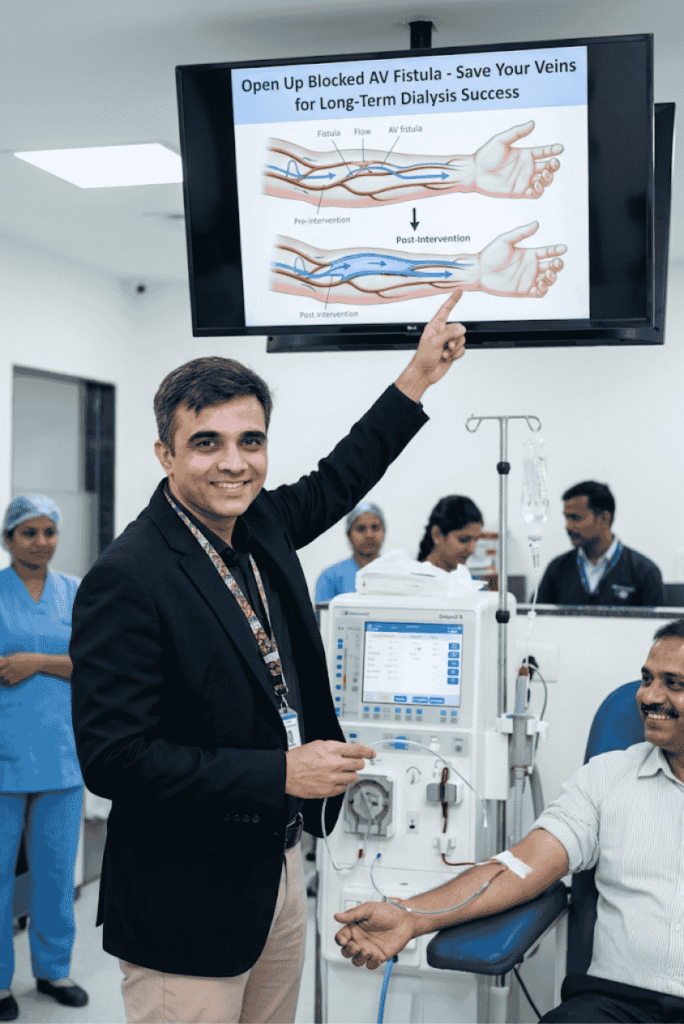
What is an AV Fistula and Why is it Important?
An arteriovenous (AV) fistula is a surgically created connection between an artery and a vein, usually in the arm. This connection allows increased blood flow, making it suitable for repeated dialysis sessions.
Compared to catheters or grafts, an AV fistula is considered the safest and most durable option for dialysis access. It has a lower risk of infection and provides better long-term outcomes when properly maintained.
Why Does an AV Fistula Become Blocked?
- Blood Clot Formation (Thrombosis)
One of the most common reasons for blockage is clot formation inside the fistula, which restricts blood flow. - Vein Narrowing (Stenosis)
Over time, the vein may become narrow due to repeated needle punctures or natural vessel changes. - Low Blood Flow or Pressure Changes
Inconsistent blood flow during dialysis can contribute to gradual dysfunction. - Infection or Vessel Injury
In rare cases, infection or trauma to the access site can affect its function.
Warning Signs of a Blocked AV Fistula
- Weak or Absent Thrill (Vibration)
A healthy fistula produces a vibration when touched. Loss of this sign may indicate blockage. - Difficulty During Dialysis Sessions
Frequent alarms or poor flow during dialysis can signal a problem. - Swelling or Pain in the Access Arm
Unusual discomfort or swelling should not be ignored. - Reduced Blood Flow Efficiency
Dialysis sessions may feel less effective or take longer than usual.
Why Early Treatment is Important
Timely intervention is essential to restore blood flow and prevent permanent damage to the fistula. Delaying treatment can lead to complete loss of access, forcing patients to rely on temporary catheters, which carry higher risks of infection and complications.
Early management helps:
- Restore normal blood flow
- Improve dialysis efficiency
- Avoid emergency procedures
Preserve veins for future use
Treatment Options for Blocked AV Fistula
- Angioplasty (Minimally Invasive Opening of Blockage)
A small balloon is used to open narrowed veins and restore proper flow. - Thrombectomy (Clot Removal Procedure)
Clots are carefully removed to re-establish circulation in the fistula. - Surgical Revision
In more complex cases, surgery may be required to repair or reconstruct the fistula.
These procedures are most effective when performed early after blockage is detected.
When Should You See a Specialist?
You should seek medical attention if you notice any changes in your fistula’s function, especially reduced thrill, swelling, or dialysis difficulties. Early evaluation is key to preventing long-term damage.
In such situations, consulting an experienced AV fistula surgeon can help restore proper blood flow and ensure your dialysis access remains functional and safe.
How to Protect Your AV Fistula for Long-Term Use
- Regular Monitoring of Thrill and Flow
Checking your fistula daily helps detect problems early. - Avoid Pressure on the Access Arm
Do not carry heavy objects or wear tight clothing on the fistula arm. - Maintain Hygiene and Care
Keeping the area clean reduces infection risk. - Attend Regular Dialysis Sessions
Consistent treatment helps maintain stable blood flow.
Proper care combined with timely medical support significantly improves long-term outcomes.
Conclusion: Protecting Your Dialysis Lifeline
A blocked AV fistula is a serious but treatable condition if addressed early. With the right medical intervention and consistent care, it is possible to restore blood flow and continue safe dialysis treatment without interruption.
Taking timely action not only protects your current access but also helps preserve your veins for long-term dialysis success.