
Is Surgery Always Needed for Vascular Problems?
Dr Krunal Gohil
When people hear the term “vascular problem,” they often assume that surgery is the only solution. However, vascular conditions can range from mild circulation issues to serious blockages that may threaten a limb. The treatment depends on the type and severity of the condition, the symptoms, and the person’s overall health. In many cases, surgery may not be the first option.
Understanding the available approaches can help patients make informed decisions about their vascular health.
Does Every Vascular Problem Require Surgery?
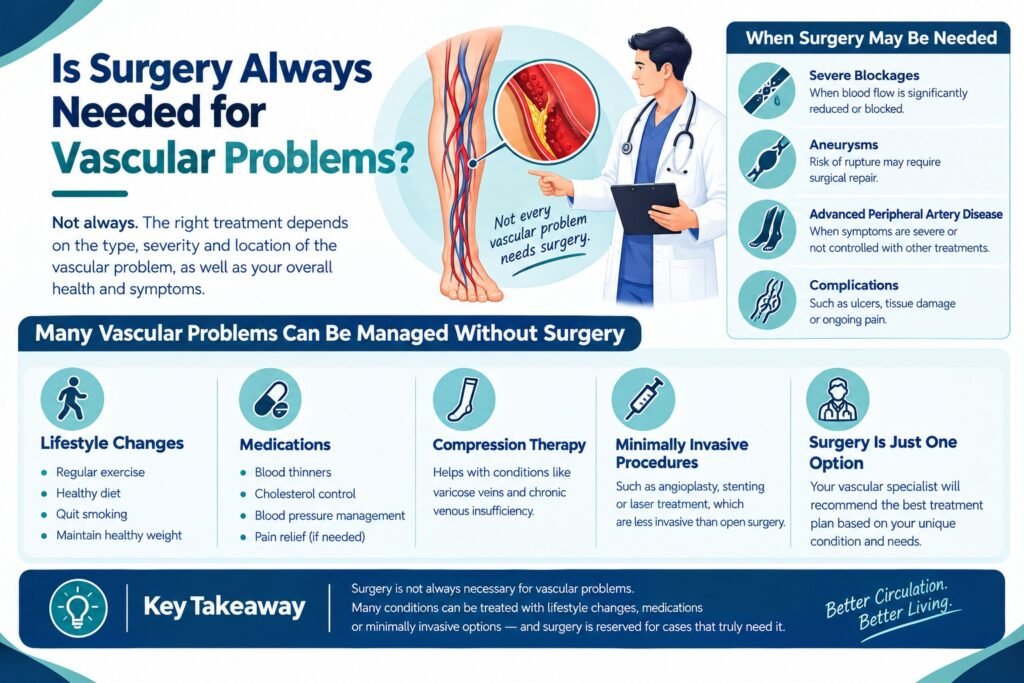
No, not every vascular condition requires surgery. Some problems can be managed with lifestyle changes, medicines, exercise, and regular monitoring. Others may require minimally invasive procedures, while more advanced conditions may need surgery.
A vascular specialist evaluates the underlying problem before recommending a treatment. The aim is to choose an approach that addresses the condition while preserving healthy blood flow and reducing the risk of complications.
What Types of Vascular Problems Can Occur?
Vascular diseases can affect both arteries and veins.
- Artery-Related Conditions
Peripheral artery disease, arterial blockages, and certain aneurysms can affect blood flow to different parts of the body. Reduced circulation may cause leg pain while walking, cold feet, numbness, or slow-healing wounds. - Vein-Related Conditions
Varicose veins and chronic venous insufficiency can cause swelling, heaviness, skin changes, and aching in the legs. - Conditions Affecting Limb Circulation
When blood supply to the legs or feet becomes significantly reduced, symptoms can become more serious. Early assessment is important to understand the cause and prevent progression.
When Can Vascular Problems Be Managed Without Surgery?
Not every patient needs an invasive procedure. Depending on the condition, treatment may begin with conservative measures.
- Lifestyle and Exercise
Regular physical activity, particularly an appropriate walking program for certain patients with peripheral artery disease, may help improve mobility. Maintaining a healthy weight and avoiding tobacco are also important for vascular health. - Managing Medical Conditions
Controlling diabetes, high blood pressure, and cholesterol can reduce the risk of vascular disease progressing. Medicines may also be prescribed when clinically appropriate. - Regular Monitoring
Some stable vascular conditions can be monitored through regular examinations and imaging rather than treated immediately.
When Are Minimally Invasive Procedures Considered?
Some vascular problems can be treated through catheter-based procedures rather than traditional open surgery.
Angioplasty and Stenting
Angioplasty uses a small balloon to widen a narrowed blood vessel. In selected cases, a stent may be placed to help keep the vessel open.
Endovascular Treatment
Certain vascular conditions can be treated from inside the blood vessel using specialised instruments. These approaches may involve smaller incisions and different recovery requirements compared with open surgery.
However, minimally invasive treatment is not appropriate for every patient. Vessel anatomy, the location of the blockage, disease severity, and other health factors all influence the decision.
When Might Surgery Become Necessary?
Surgery may be considered when blood flow is severely reduced, the disease is extensive, or other treatment approaches are unlikely to provide adequate results.
Severe Reduction in Blood Flow
Advanced circulation problems may threaten tissue health, particularly when there are persistent wounds or pain at rest.
Complex or Extensive Blockages
Some blockages may be difficult to treat with minimally invasive techniques and may require surgical reconstruction or bypass.
Certain Vascular Emergencies
Some conditions, including specific aneurysms or sudden arterial blockages, may require urgent intervention.
A vascular surgeon assesses the individual situation before deciding whether an operation is appropriate.
How Is the Right Treatment Decided?
Treatment should be based on more than just the presence of a blockage. Doctors generally consider:
Severity and location of the vascular problem
Symptoms and their effect on daily activities
Blood flow and condition of the affected vessels
Diabetes, blood pressure, cholesterol, and other health conditions
Previous vascular procedures
Overall treatment risks and expected benefits
A detailed assessment helps determine whether monitoring, medication, lifestyle measures, an endovascular procedure, or surgery is appropriate.
What Happens During a Vascular Evaluation?
A vascular evaluation usually begins with a discussion about symptoms and medical history, followed by a physical examination.
Doppler Ultrasound
This non-invasive test can assess blood flow through arteries and veins and identify areas of narrowing or blockage.
Additional Vascular Imaging
Depending on the suspected condition, CT angiography, MR angiography, or conventional angiography may be recommended to understand the blood vessels in greater detail.
Consulting a vascular expert can help identify the underlying cause of symptoms and determine the most appropriate treatment approach.
Why Early Evaluation Matters
Vascular conditions can sometimes progress gradually without causing severe symptoms at first. Early evaluation may allow risk factors to be addressed and treatment to begin before complications develop.
Symptoms such as persistent leg pain, cold or discoloured feet, non-healing wounds, sudden swelling, or significant changes in circulation should receive medical attention rather than being attributed to aging alone.
The Right Treatment Depends on the Condition
Surgery is not automatically required for every vascular problem. Some conditions can be managed with lifestyle measures, medicines, and monitoring, while others may require minimally invasive treatment or surgery.
The most appropriate approach depends on the individual’s condition, symptoms, blood flow, vessel anatomy, and overall health. A vascular specialist can evaluate these factors and help determine the safest and most suitable treatment pathway. Early medical attention is particularly important when symptoms suggest significantly reduced blood flow or a risk to tissue health.