
Is Poor Circulation the Real Reason Your Diabetic Foot Ulcer Keeps Getting Worse?
Dr Krunal Gohil
You have been cleaning your wound, changing dressings, resting your foot yet it is not healing. Before trying anything else, ask this one question: is blood actually reaching that wound? For many diabetic patients, poor circulation is not just a side issue. It is the main reason the wound will not close.
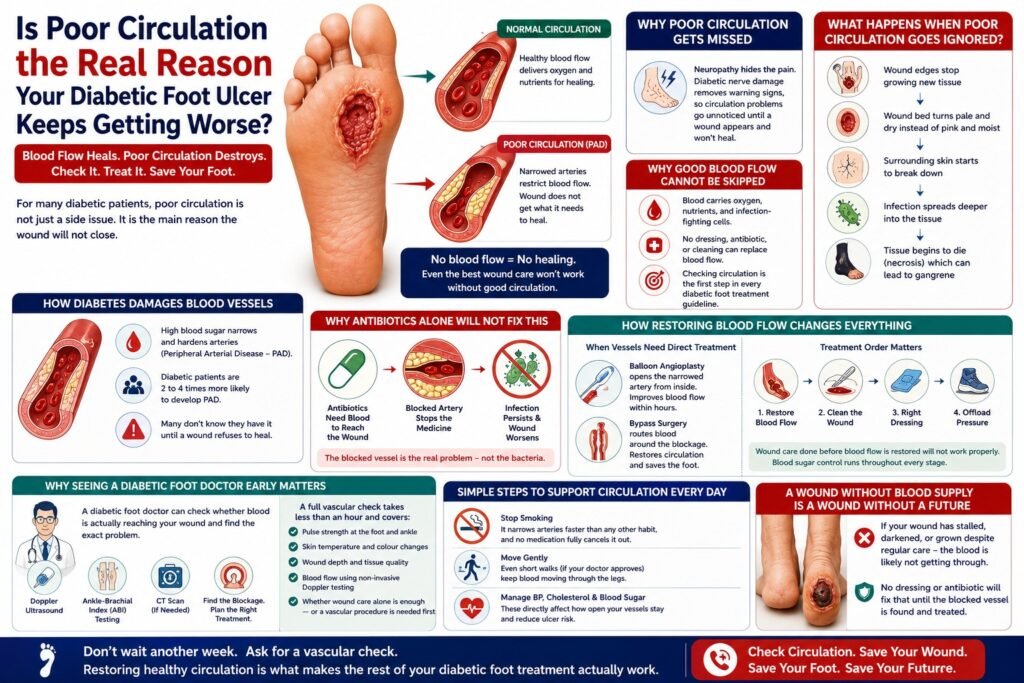
What Blood Actually Does for a Wound
Healing needs blood. When a wound forms, your body sends oxygen, nutrients, and infection-fighting cells to the area through the bloodstream. Without enough blood supply, none of this happens. The wound just sits there not healing, not improving and slowly gets worse.
How Diabetes Damages the Blood Vessels in Your Feet?
Years of high blood sugar narrow and harden the arteries in your legs and feet. This is called peripheral arterial disease (PAD). It cuts blood flow to the lower limbs. Diabetic patients are 2 to 4 times more likely to develop PAD and many do not know they have it until a wound refuses to heal.
Why So Many Patients Miss the Warning Signs?
In most people, poor leg circulation causes pain cramping while walking, cold feet, aching that forces rest. But diabetic patients often also have nerve damage (neuropathy), which removes that pain signal entirely. So circulation quietly gets worse and the patient feels nothing until a wound appears and will not heal.
Why Good Blood Flow Cannot Be Skipped?
No dressing, no antibiotic, and no wound cleaning can replace blood flow. Healthy circulation carries the building blocks that repair tissue. If blood is not reaching the wound, even the best treatment plan will not work. This is why checking circulation is the first step in every major diabetic foot wound guideline.
What Happens When Poor Circulation Goes Ignored?
Without blood supply, the wound follows a clear and preventable path downward:
▶ Wound edges stop growing new tissue
▶ The wound bed turns pale and dry instead of pink and moist
▶ Surrounding skin starts to break down
▶ Infection spreads deeper into the tissue
▶ Tissue begins to die (necrosis) which can lead to gangrene
Why Antibiotics Alone Will Not Fix This?
Antibiotics reach a wound through the bloodstream. If the artery is blocked, the medicine cannot get there no matter how strong the dose. Many patients take round after round of antibiotics with no improvement. Not because the antibiotic is wrong, but because the blood carrying it cannot reach the wound. The blocked vessel is the real problem not the bacteria.
How Restoring Blood Flow Changes Everything
When Vessels Need Direct Treatment
If a scan confirms a blocked artery, a vascular procedure becomes the priority. Balloon angioplasty opens the narrowed artery from inside it is a simple procedure and can improve blood flow within hours. If the blockage is too large, a bypass graft routes blood around it. Both work well and can turn a wound heading toward amputation into one that heals fully.
How Diabetic Foot Treatment Changes When Circulation Is the Problem
Effective diabetic foot treatment for a wound with poor circulation follows a set order: first, restore blood flow. Then clean the wound, choose the right dressing, and take pressure off the area. Wound care done before blood flow is restored will not work properly because the body cannot use those treatments without oxygen and immune cells that blood delivers. Blood sugar control runs throughout every stage.
Why Seeing a Diabetic Foot Doctor Early Matters?
A diabetic foot doctor whether a podiatric specialist, vascular surgeon, or wound care physician can check whether blood is actually reaching your wound. Using Doppler ultrasound, ankle-brachial index (ABI) testing, and CT scans, they find exactly where the blockage is and what needs to be done.
A full vascular check takes less than an hour and covers:
- Pulse strength at the foot and ankle
- Skin temperature and colour changes
- Wound depth and tissue quality
- Blood flow using non-invasive Doppler testing
- Whether wound care alone is enough — or a vascular procedure is needed first
Simple Steps to Support Circulation Every Day
Vascular procedures fix existing blockages but daily habits decide whether things improve or get worse from here:
- Stop smoking – it narrows arteries faster than any other habit, and no medication fully cancels it out.
- Move gently – even short walks (if your doctor approves) keep blood moving through the legs.
- Manage blood pressure and cholesterol – along with blood sugar, these directly affect how open your vessels stay.
A Wound Without Blood Supply Is a Wound Without a Future
If your wound has stalled, darkened, or grown despite regular care the blood is likely not getting through. No dressing or antibiotic will fix that until the blocked vessel is found and treated.
Do not wait another week. Ask for a vascular check. See a vascular expert who understands that restoring healthy circulation is not just one part of your diabetic foot treatment it is what makes the rest of it actually work.