
Importance of a Healthy Blood Flow in Dialysis Patients
Dr Krunal Gohil
Simple Steps to Keep Your Legs Healthy and Veins Strong
Healthy blood flow is the foundation of successful dialysis treatment. For patients with kidney failure, dialysis acts as a life-sustaining process that removes waste, excess fluid, and toxins from the body. However, the effectiveness of dialysis largely depends on one critical factor smooth and consistent blood circulation through a properly created vascular connection. When blood flow is compromised, dialysis becomes less efficient and may lead to complications over time.
Understanding how blood flow works in dialysis patients and how to maintain it is essential for long-term health and treatment success.
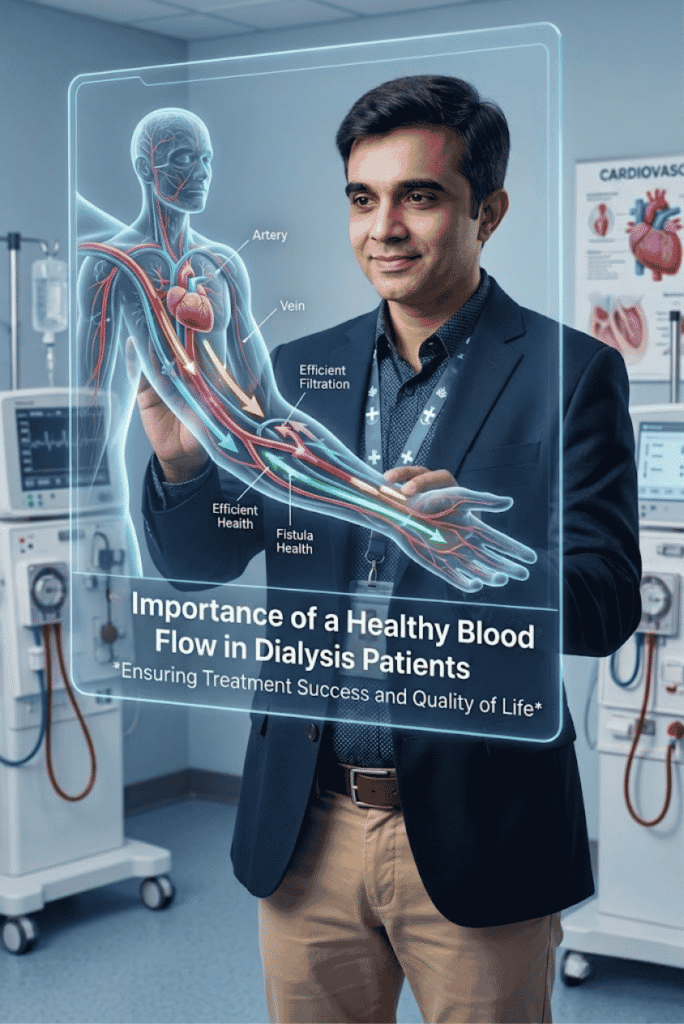
Why Blood Flow is So Important in Dialysis
Dialysis works by continuously circulating blood from the body through a machine that filters waste and then returns it back. For this process to work efficiently, a strong and stable blood flow is required.
If blood flow is slow or blocked, the dialysis process becomes less effective, meaning toxins may not be fully removed. This can lead to fatigue, fluid overload, and other health issues. That is why maintaining a reliable circulation pathway is so important for every dialysis patient.
What is a Vascular Access and Why It Matters
To perform dialysis repeatedly, a special connection is created between an artery and a vein, known as an arteriovenous (AV) fistula. This connection allows high blood flow, making dialysis smoother and more effective.
A well-functioning fistula is considered the best form of long-term vascular access because it:
- Provides strong and consistent blood flow
- Reduces infection risk compared to catheters
- Supports long-term dialysis treatment
- Improves overall patient comfort
Proper planning and surgical expertise play a major role in ensuring its success.
How Poor Blood Flow Affects Dialysis Patients
When blood circulation is not optimal, several problems can arise:
- Incomplete Dialysis Treatment
Toxins may not be fully removed, leading to weakness and poor health. - Clot Formation in Access Site
Slow flow increases the risk of clotting and blockage. - Frequent Dialysis Interruptions
Machines may show alarms or stop working due to poor circulation. - Swelling and Discomfort
Poor venous return can cause swelling in the access arm.
These signs should never be ignored, as they indicate that vascular access may need medical attention.
Signs of Good vs Poor Blood Flow:
Signs of Healthy Blood Flow
- Strong vibration (thrill) at the fistula site
- Smooth and uninterrupted dialysis sessions
- No swelling or pain in the access arm
- Efficient toxin removal during treatment
Signs of Poor Blood Flow
- Weak or absent thrill
- Difficulty during dialysis sessions
- Swelling or heaviness in the arm
- Reduced effectiveness of treatment
Recognizing these signs early can help prevent complications.
Role of AV Fistula in Maintaining Healthy Blood Flow That Support Healthy Veins
A properly created AV fistula plays a central role in ensuring smooth circulation. It allows blood to flow at a higher rate, which is essential for efficient dialysis.
In many cases, improving or correcting vascular access requires expert evaluation. Seeking timely A.V fistula treatment can help restore proper flow and ensure dialysis continues without interruption. Early intervention also helps preserve veins for future use, which is important for long-term kidney care.
How Specialists Improve Dialysis Blood Flow
When blood flow problems occur, vascular specialists use advanced techniques to restore function. These may include:
- Angioplasty
A minimally invasive procedure that opens narrowed blood vessels. - Thrombectomy
Removal of clots that are blocking the fistula. - Surgical Revision
Repair or modification of the existing access for better performance.
These treatments help improve circulation and restore effective dialysis sessions.
In complex cases, consulting an experienced vascular specialist ensures accurate diagnosis and long-term access protection.
Daily Care Tips to Maintain Healthy Blood Flow
Patients can also take simple steps to protect their vascular access:
- Avoid pressure or tight clothing on the access arm
- Check fistula vibration daily
- Maintain proper hygiene around the access site
- Report any changes in flow or swelling immediately
- Follow scheduled dialysis sessions regularly
Small daily habits can significantly improve long-term outcomes.
How Strong Calf Muscles Protect Your Vein Health Long-Term
Strong calf muscles ensure continuous blood circulation and reduce pressure in the veins. When supported with regular movement and healthy habits, they significantly lower the risk of developing varicose veins in the future. Consistency is key; small daily efforts can make a lasting difference.
Improving Everyday Life with Better Dialysis Care
Healthy blood flow is the key to effective dialysis and long-term kidney care. A well-functioning vascular access ensures that treatment is smooth, efficient, and safe. Recognizing early signs of poor circulation and seeking timely medical care can prevent serious complications.
With proper monitoring, lifestyle care, and expert support when needed, dialysis patients can maintain strong vascular access and improve their overall quality of life.