
How Can Diabetic Patients Prevent Foot Ulcers Before They Ever Form?
Dr Krunal Gohil
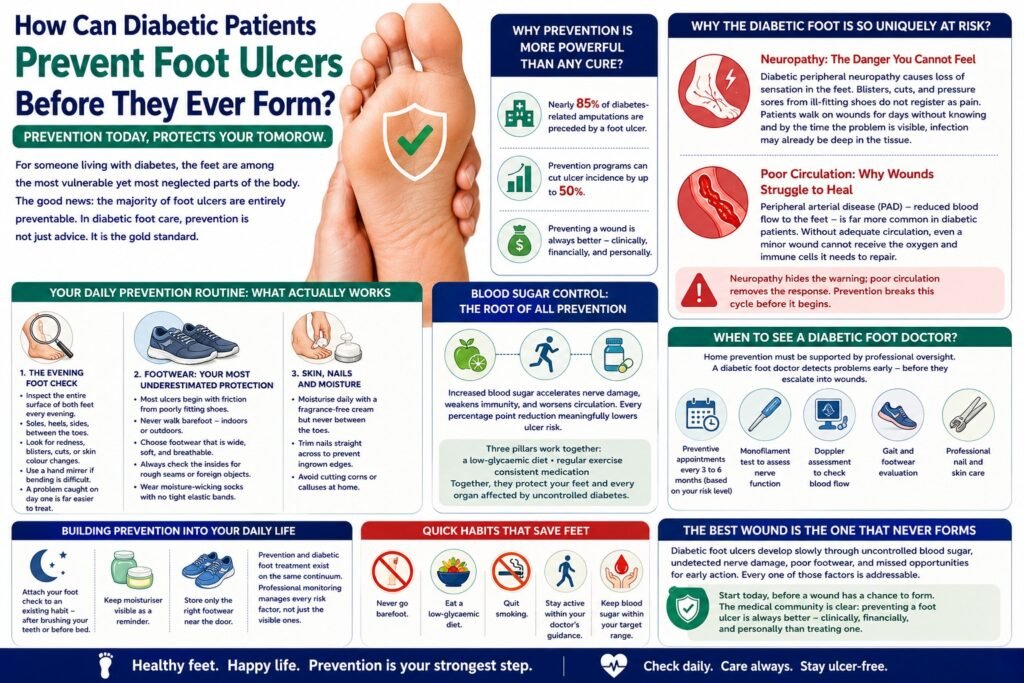
For someone living with diabetes, the feet are among the most vulnerable yet most neglected parts of the body. The good news: the majority of foot ulcers are entirely preventable. In diabetic foot care, prevention is not just advice. It is the gold standard.
Why Prevention Is More Powerful Than Any Cure?
A diabetic foot ulcer can lead to hospitalisation, prolonged wound care, surgery, and in serious cases, amputation. Studies show that nearly 85% of diabetes-related amputations are preceded by a foot ulcer. Research from the IWGDF confirms that structured prevention programmes education, regular screening, and proper footwear can cut ulcer incidence by up to 50%. The burden of treating an advanced wound far outweighs everything prevention requires.
Why the Diabetic Foot Is So Uniquely at Risk?
Neuropathy: The Danger You Cannot Feel
Diabetic peripheral neuropathy causes loss of sensation in the feet. Blisters, cuts, and pressure sores from ill-fitting shoes do not register as pain. Patients walk on wounds for days without knowing and by the time the problem is visible, infection may already be deep in the tissue.
Poor Circulation: Why Wounds Struggle to Heal
Peripheral arterial disease (PAD) reduced blood flow to the feet is far more common in diabetic patients. Without adequate circulation, even a minor wound cannot receive the oxygen and immune cells it needs to repair. Neuropathy hides the warning; poor circulation removes the response. Prevention breaks this cycle before it begins.
Your Daily Prevention Routine: What Actually Works
The Evening Foot Check
Inspect the entire surface of both feet every evening soles, heels, sides, between the toes. Look for redness, blisters, cuts, or skin colour changes. Use a hand mirror if bending is difficult. A problem caught on day one is far easier to treat than one caught on day ten.
Footwear: Your Most Underestimated Protection
Most ulcers begin with friction from poorly fitting shoes. Never walk barefoot indoors or outdoors. Choose footwear that is wide, soft, and breathable. Always check the insides for rough seams or foreign objects. Wear moisture-wicking socks with no tight elastic bands.
Skin, Nails, and Moisture
Moisturise daily with a fragrance-free cream but never between the toes. Trim nails straight across to prevent ingrown edges. Avoid cutting corns or calluses at home. These small habits are core elements of effective diabetic foot treatment when practised consistently.
Blood Sugar Control: The Root of All Prevention
Increased blood sugar accelerates nerve damage, weakens immunity, and worsens circulation. Every percentage point reduction meaningfully lowers ulcer risk. Patients who maintain sugar level below 7% show significantly lower complication rates across all major studies.
Three pillars work together: a low-glycaemic diet reduces glucose spikes; regular moderate exercise improves circulation; and consistent medication oral or insulin taken without gaps keeps glucose stable. Together, they protect your feet and every organ affected by uncontrolled diabetes.
When to See a Diabetic Foot Doctor?
Home prevention must be supported by professional oversight. A diabetic foot doctor detects nerve changes, circulation problems, and structural deformities before they escalate into wounds something no amount of self-care can replicate.
- Preventive appointments every 3 to 6 months (based on your risk level)
- Monofilament test to assess nerve function
- Doppler assessment to check blood flow
- Gait and footwear evaluation
- Professional nail and skin care
Building Prevention Into Your Daily Life
Prevention works best when it becomes instinct, not effort. Attach your foot check to an existing habit after brushing your teeth or before bed. Keep moisturiser visible as a reminder. Store only the right footwear near the door.
Prevention and diabetic foot treatment exist on the same continuum. Even patients who have never had an ulcer benefit from a structured care plan with professional monitoring, medication reviews, and podiatric support managing every risk factor, not just the visible ones.
The Best Wound Is the One That Never Forms
Diabetic foot ulcers develop slowly through uncontrolled blood sugar, undetected nerve damage, poor footwear, and missed opportunities for early action. Every one of those factors is addressable.
Start today, before a wound has a chance to form. The medical community is clear: preventing a foot ulcer is always better clinically, financially, and personally than treating one.