
Effective AV Fistula Care for Safer and Better Dialysis Outcomes
Dr Krunal Gohil
Ensuring Reliable Vascular Access for Improved Dialysis Performance and Long-Term Care
For patients undergoing dialysis, maintaining a reliable vascular access is essential for effective treatment. One of the most commonly recommended and preferred options is an arteriovenous (AV) fistula. It provides a strong and durable connection between an artery and a vein, allowing better blood flow during dialysis. With proper care and timely medical attention, an AV fistula can significantly improve treatment outcomes and overall quality of life.
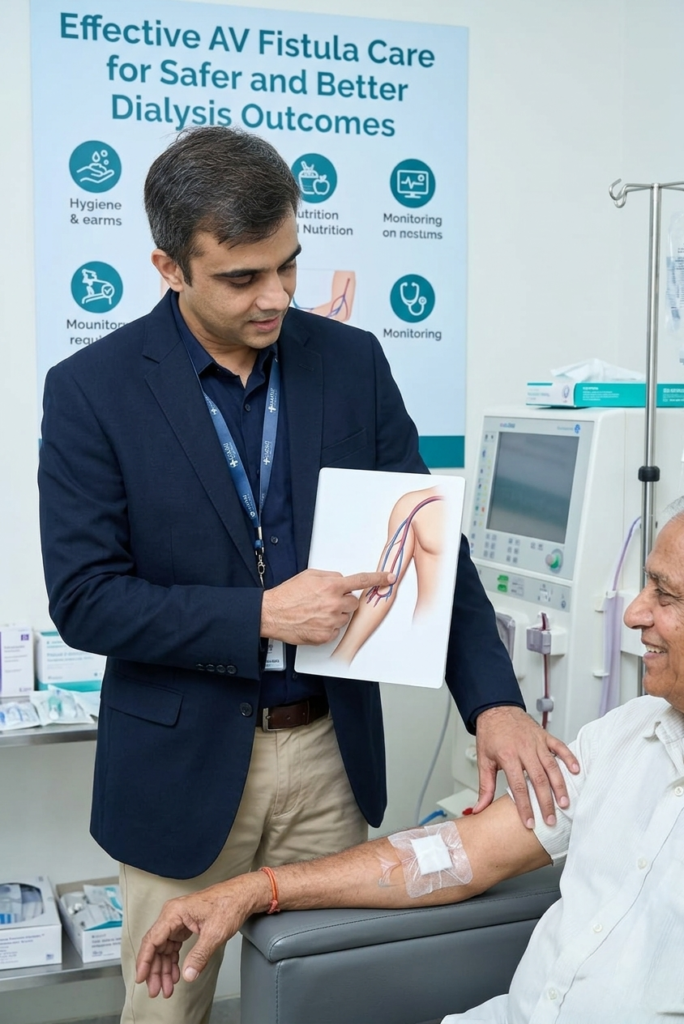
What is an AV Fistula and Why is it Important?
An AV fistula is a surgically created connection between an artery and a vein, usually in the arm. This connection allows the vein to grow stronger and wider over time, making it easier to handle the repeated needle insertions required for dialysis.
Compared to other forms of vascular access, an AV fistula is considered safer and more effective. It reduces the risk of infections and provides consistent blood flow, which is essential for efficient dialysis sessions.
Why is an AV Fistula Recommended for Dialysis Patients?
- Reliable and Long-Term Vascular Access
An AV fistula is known for its durability and can last for many years with proper care, making it a preferred choice for long-term dialysis. - Better Blood Flow for Effective Dialysis
It allows higher blood flow rates, which improves the efficiency of dialysis and helps remove toxins more effectively. - Lower Risk of Infection and Complications
Compared to catheters, AV fistulas have a significantly lower risk of infection and clotting, ensuring safer treatment.
Signs and Symptoms That Need Attention
- Swelling or Bulging Around the Fistula Site
Mild swelling is common initially, but persistent or increasing swelling may indicate a problem. - Warmth, Redness, or Skin Changes
These signs may suggest infection and should be evaluated promptly. - Pain or Discomfort in the Arm
Unusual or continuous pain may indicate complications that require medical attention. - Reduced Blood Flow or Weak Thrill
A healthy fistula produces a vibration (thrill). If it becomes weak or absent, it may signal blockage.
Possible Complications of Untreated AV Fistula Issues
- Clotting or Blockage of the Fistula
Reduced blood flow can lead to clot formation, affecting dialysis efficiency. - Reduced Dialysis Effectiveness
A poorly functioning fistula can compromise the overall effectiveness of dialysis sessions. - Strain on the Heart in Severe Cases
In rare situations, increased blood flow can put additional pressure on the heart.
When Should You Consult a Specialist?
It is important to seek medical advice if you notice any unusual changes in your fistula. Symptoms such as pain, swelling, or difficulty during dialysis should not be ignored.
If you experience any of these signs, consulting an experienced AV fistula surgeon in Ahmedabad can help ensure timely diagnosis and proper management, reducing the risk of complications.
AV Fistula Procedure: What to Expect
- Pre-Surgical Evaluation and Planning
Before the procedure, doctors assess the veins and arteries to determine the best site for creating the fistula. - The Surgical Procedure
The surgery involves connecting an artery to a vein under controlled conditions. It is usually performed under local anesthesia. - Healing and Maturation Phase
After surgery, the fistula needs time to mature, which can take a few weeks. During this period, the vein becomes stronger and ready for dialysis use.
Treatment and Management Options for AV Fistula Care
- Regular Monitoring and Follow-Up
Routine check-ups help ensure the fistula is functioning properly. - Medication and Blood Flow Management
Medications may be prescribed to improve circulation and prevent clotting. - Minimally Invasive Interventions
Procedures like angioplasty may be used to restore blood flow if blockages occur. - Surgical Revision in Complex Cases
In certain situations, additional surgery may be required to maintain fistula function. - Choosing a skilled AV fistula surgeon in Ahmedabad ensures proper care, long-term functionality, and better treatment outcomes.
Daily Care Tips to Maintain a Healthy AV Fistula
- Keep the Area Clean and Protected
Maintaining hygiene reduces the risk of infection. - Avoid Pressure or Injury to the Arm
Do not wear tight clothing or carry heavy weights on the affected arm. - Check Blood Flow Regularly
Feel for the vibration (thrill) daily to ensure proper function. - Follow Medical Advice Consistently
Adhering to your doctor’s guidance is key to long-term success.
How Proper Care Improves Long-Term Outcomes
With the right care and regular monitoring, an AV fistula can function effectively for years. Early detection of issues and timely intervention can prevent complications and improve dialysis efficiency.
With guidance from an expert AV fistula surgeon in Ahmedabad, patients can achieve better outcomes, fewer complications, and improved overall well-being.
Conclusion: Taking the Right Steps for Better Dialysis Care
An AV fistula plays a vital role in ensuring safe and effective dialysis treatment. Understanding its importance, recognizing early warning signs, and maintaining proper care can make a significant difference in patient outcomes.
Timely medical support and consistent care can help you lead a healthier and more comfortable life while managing dialysis effectively.