
Can Gangrene Be Treated Without Amputation?
Dr Krunal Gohil
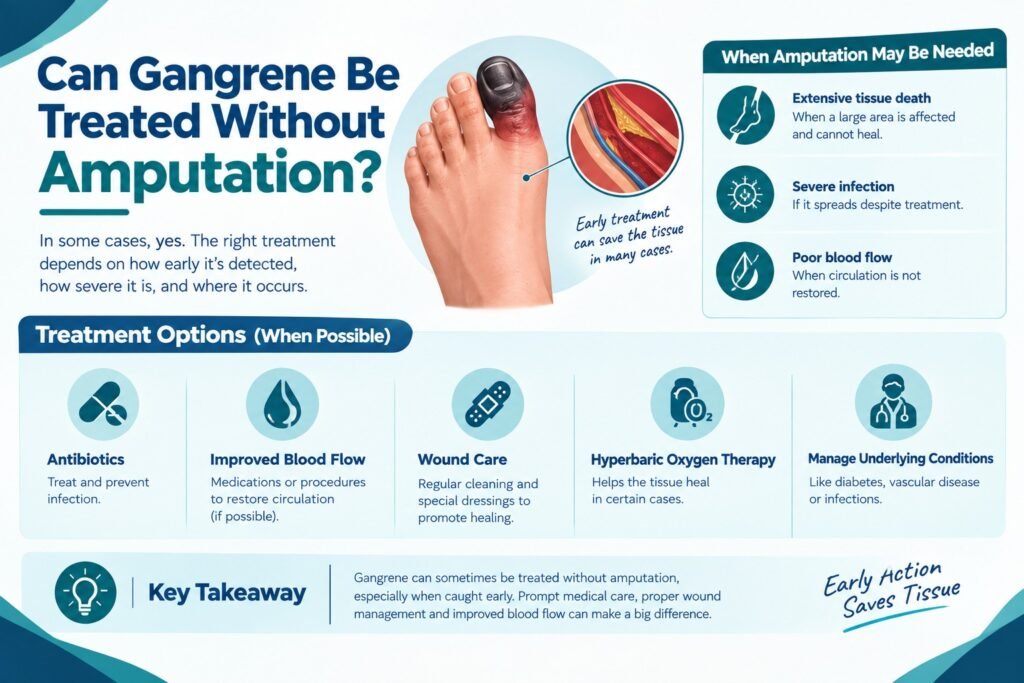
When a person is diagnosed with gangrene, one of the first concerns is whether amputation will be necessary. Although gangrene is a serious condition that requires prompt medical attention, amputation is not automatically required in every case. The treatment approach depends on the cause, the extent of tissue damage, blood circulation, presence of infection, and the overall health of the affected person.
Understanding these factors can help patients and families make sense of the treatment process and why early medical evaluation is so important.
What Happens When Gangrene Develops?
Gangrene occurs when body tissue dies because it is not receiving enough blood supply or because severe infection has damaged the tissue. It most commonly affects the toes, feet, fingers, or legs, particularly in people with diabetes, poor circulation, or certain vascular conditions.
Changes in skin colour, increasing pain, swelling, unusual coldness, numbness, or a wound that is not healing can be warning signs. In some cases, the affected area may develop a foul-smelling discharge or other signs of infection.
Does Gangrene Always Lead to Amputation?
No, not every case of gangrene results in amputation. The possibility of preserving the affected limb depends on how early the condition is identified and how much healthy tissue remains.
Doctors may consider whether blood flow can be improved, whether infection can be controlled, and whether damaged tissue can be safely removed. When viable tissue can be preserved, treatment may focus on protecting it and addressing the underlying cause.
However, severe or advanced gangrene can sometimes make amputation necessary to prevent the condition from causing further harm.
- Why Blood Flow Matters in Saving a Limb
Healthy tissues need an adequate supply of oxygen and nutrients from the blood. When an artery is severely narrowed or blocked, wounds may struggle to heal and tissue damage can progress. - Poor Circulation Can Prevent Wounds From Healing
Poor arterial circulation may cause persistent foot wounds, pain, skin colour changes, or coldness in the affected limb. Conditions such as peripheral artery disease can contribute to reduced blood flow and increase the risk of tissue damage. - Restoring Circulation May Protect Healthy Tissue
In selected patients, improving circulation can become an important part of limb-preservation treatment. Depending on the blockage and the person’s condition, doctors may consider procedures such as angioplasty, stenting, or bypass surgery.
What Signs Suggest Gangrene Needs Urgent Attention?
Certain changes should not be ignored. Seek prompt medical evaluation if there is black, purple, or unusually pale skin, severe or worsening pain, sudden numbness, a cold foot or toe, swelling, spreading redness, foul-smelling discharge, or a wound that is becoming worse instead of healing.
Early assessment can help doctors identify the underlying problem before more tissue is affected.
How Does a Gangrene Specialist Assess the Condition?
A gangrene specialist may begin with a physical examination and review of the person’s medical history, diabetes status, wounds, circulation, and symptoms. Doppler ultrasound may be used to assess blood flow through the arteries, while additional vascular imaging can be recommended when a blockage needs closer evaluation.
Identifying the cause is essential because treating only the visible wound may not be enough when poor circulation is contributing to tissue damage.
What Gangrene Treatment Options May Help Save Healthy Tissue?
The right gangrene treatment depends on the type and severity of the condition. Treatment may involve controlling infection, improving blood circulation, caring for the wound, and removing tissue that has already died when necessary.
Antibiotics may be used when a bacterial infection is present. Procedures to improve blood flow may be considered when an arterial blockage is contributing to the problem. Wound care and removal of non-viable tissue can also be part of the treatment plan.
When Can a Vascular Expert Help With Limb Preservation?
A vascular expert can evaluate whether poor arterial circulation is contributing to tissue damage and whether blood flow can be improved. This assessment can be particularly important when gangrene develops in a person with peripheral artery disease or other circulation problems.
The goal is not simply to treat the visible tissue changes but to address the underlying cause whenever possible.
When May Amputation Still Be Necessary?
In some situations, amputation may be medically necessary. This can happen when tissue damage is extensive, infection cannot be controlled, or the affected tissue is no longer viable and poses a serious risk to the person’s health.
The decision depends on the individual condition and should be made after careful medical assessment.
The Goal Is to Treat the Cause and Protect Viable Tissue
Gangrene should always be treated as a serious medical condition. Amputation is not inevitable in every case, but the chance of preserving healthy tissue depends greatly on the extent of damage, blood supply, infection, and how quickly treatment begins. Prompt evaluation can help identify the cause and determine the most appropriate approach for protecting the affected limb.