
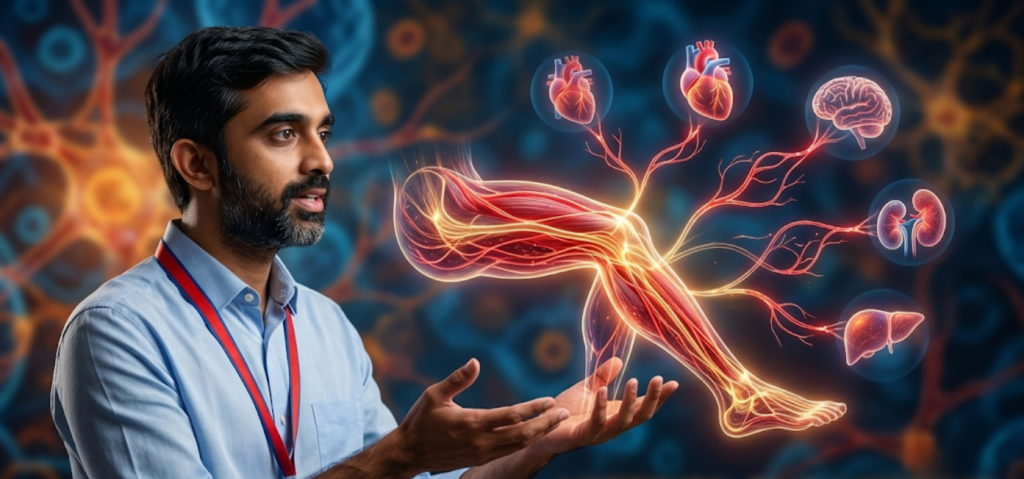
Arteries Are the Lifeline of Every Organ - Your Legs Are No Exception
Dr Krunal Gohil
Why Healthy Blood Flow Is Essential for Successful Dialysis
Do you brush off leg pain as tiredness after a long day? Many people do. But sometimes, what feels like ordinary fatigue or muscle soreness is your body sending a much deeper signal one that starts inside your arteries.
Just like the heart needs uninterrupted blood supply to survive, every organ in your body depends on arteries to stay alive and functional. Your legs are no different. When the arteries supplying your legs begin to narrow or get blocked, the consequences go far beyond discomfort. And the worrying part? It often begins without any dramatic warning.
What Happens When Leg Arteries Start to Narrow?
Arteries are not just tubes carrying blood they are dynamic, muscular vessels designed to maintain strong, consistent flow. When fatty deposits called plaque accumulate along the inner walls of these vessels, the space for blood to travel shrinks. Less blood means less oxygen. Less oxygen means your muscles, nerves, and tissues in the legs begin to suffer quietly.
This narrowing does not happen overnight. It builds over years often accelerated by smoking, diabetes, high blood pressure, or high cholesterol. By the time symptoms become noticeable, the blockage may already be significant.
Why the Legs Are Especially Vulnerable
The arteries supplying the legs are among the longest in the body. They travel a great distance from the heart, making them more susceptible to circulation problems. Any slowdown in blood flow hits the legs earlier and harder than most other areas which is exactly why the legs are often the first place where arterial disease shows up.
Signs Your Leg Arteries Are Sending You a Warning
The body rarely stays silent. It gives signals we just need to know what to look for.
Pain That Comes and Goes - Do Not Ignore the Pattern
One of the most telling early signs is cramping or aching pain in the calves, thighs, or buttocks that appears during walking and disappears with rest. This is called claudication, and it is a classic indicator that blood is struggling to reach the muscles when they need it most.
From Heaviness to Cold Feet: Symptoms Worth Noting
- Persistent heaviness or fatigue in the legs
- Numbness or tingling, especially in the feet
- One foot or leg feeling noticeably colder than the other
- Slow-healing wounds or sores on the feet or toes
- Skin that appears pale, bluish, or shiny on the lower legs
If you or someone you know is experiencing a combination of these, it is time to take it seriously.
Getting the Right Help: How Peripheral Arterial Disease Treatment Works
The condition responsible for most of these symptoms is called Peripheral Arterial Disease a circulatory problem where narrowed arteries reduce blood flow to the limbs. The good news is that peripheral arterial disease treatment has evolved significantly and offers effective options at every stage.
Lifestyle Changes That Actually Make a Difference
In early stages, structured walking programs, dietary changes, quitting smoking, and managing blood sugar and cholesterol can slow progression meaningfully. These are not optional additions they are core parts of treatment.
When Medication and Procedures Step In
When lifestyle changes are not enough, doctors may prescribe medications to improve blood flow or prevent clot formation. In more advanced cases, minimally invasive procedures like angioplasty or surgical bypass help restore circulation to the affected limb often preventing amputation.
Protecting Your Leg Arteries Before Problems Begin
Prevention always works better than cure. Regular physical activity, a heart-healthy diet, avoiding tobacco, and keeping metabolic conditions under control go a long way in keeping leg arteries healthy and clear.
Who Should Get Screened and When
Anyone above 50, or younger with risk factors like diabetes or smoking history, should consider an ABI (Ankle-Brachial Index) test a simple, painless screening that checks how well blood is flowing to your legs.
Your Legs Deserve the Same Attention as Your Heart
Leg pain is not something to walk off and forget. When arteries are compromised, your mobility, independence, and quality of life are all on the line. Recognising the signs early and seeking the right care can make the difference between recovery and long-term damage.
If your legs have been trying to tell you something it is time to listen.