
Why Dialysis Flow Issues Happen and How to Fix Them?
Dr Krunal Gohil
Why Healthy Blood Flow Is Essential for Successful Dialysis
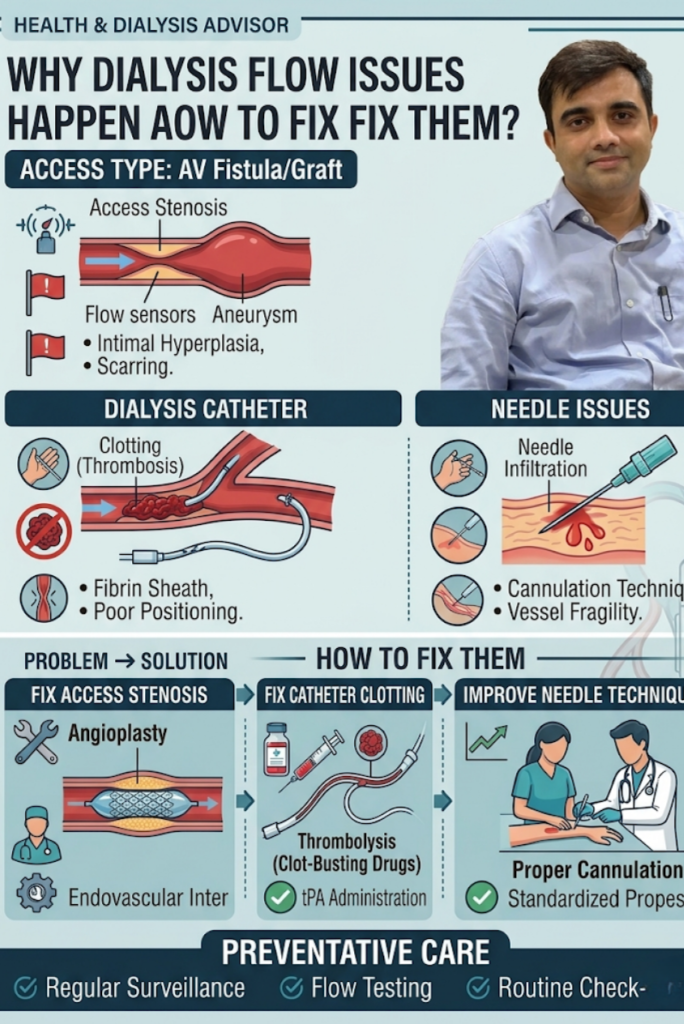
For patients undergoing dialysis, smooth and consistent blood flow is essential for effective treatment. When flow problems occur, dialysis may become less efficient, leading to fatigue, incomplete toxin removal, and overall discomfort. Many of these issues are linked to problems with the vascular connection used during dialysis, commonly known as an A.V fistula. Understanding why these flow issues happen and how they can be corrected is important for maintaining long-term dialysis success
Why Blood Flow Matters in Dialysis?
Dialysis works by circulating blood through a machine that filters out waste and excess fluid. For this process to work properly, a steady and adequate blood flow is required. If the flow is reduced or interrupted, the machine cannot function efficiently, and the treatment may not deliver the expected results.
A well-functioning A.V fistula allows high blood flow, making dialysis sessions smoother, safer, and more effective.
Common Causes of Dialysis Flow Problems:
- Narrowing of Blood Vessels (Stenosis)
Over time, blood vessels can become narrow, restricting the flow needed for dialysis. - Blood Clot Formation
Clots inside the fistula can partially or completely block blood circulation. - Repeated Needle Use
Frequent needle insertions during dialysis can weaken the vessel walls and affect flow. - Poor Vessel Quality
Some patients may naturally have weaker veins, making long-term access more challenging.
These factors can develop gradually, which is why regular monitoring is important.
Signs That Indicate Flow Issues
- Frequent Machine Alarms During Dialysis
This often indicates difficulty in maintaining proper blood flow. - Weak or Absent Thrill
A healthy A.V fistula produces a vibration. A weak or missing thrill may signal a blockage. - Swelling or Pain in the Arm
Changes around the access site should not be ignored. - Incomplete Dialysis Sessions
Feeling unwell or tired after treatment may indicate that dialysis is not fully effective.
Recognizing these signs early can help prevent serious complications
Why Repeated Flow Issues Should Not Be Ignored?
Repeated problems with dialysis flow can lead to complete failure of the access. This may require the use of temporary catheters, which have a higher risk of infection and other complications.
Early attention helps:
- Prevent permanent damage to the access
- Maintain effective dialysis sessions
- Preserve veins for future use
- Reduce the need for emergency procedures
Addressing issues at the right time can make a significant difference in long-term outcomes.
How Blocked Access Can Be Restored
Modern medical techniques allow doctors to restore a blocked A.V fistula in many cases, avoiding the need for creating a new access.
- Angioplasty
A minimally invasive procedure where a small balloon is used to open narrowed vessels and improve blood flow. - Thrombectomy
This involves removing clots that are blocking the fistula. - Surgical Revision
In some cases, minor surgery is performed to repair or improve the existing access.
Timely A.V fistula care ensures that these treatments are more effective and long-lasting.
How Dialysis Flow Problems Are Diagnosed?
Doctors use simple and advanced methods to identify the cause of flow issues:
- Physical Examination
Checking the thrill and overall condition of the access site. - Doppler Ultrasound
Helps evaluate blood flow and detect narrowing or blockages. - Angiography
Provides a detailed view of blood vessels for accurate diagnosis.
These tests help in planning the right treatment approach.
Treatment Options to Restore Proper Flow
- Angioplasty
A minimally invasive procedure where a balloon is used to open narrowed blood vessels. - Thrombectomy
Removal of blood clots that are blocking the fistula. - Surgical Revision
In some cases, the existing access may need repair or modification.
Timely A.V fistula treatment can help restore normal flow and improve dialysis efficiency.
Importance of Expert Guidance
Repeated flow issues often indicate an underlying problem that needs expert evaluation. Consulting a vascular specialist ensures proper diagnosis, targeted treatment, and long-term management of dialysis access.
Early guidance helps avoid repeated failures and improves the durability of the A.V fistula.
Daily Care Tips to Maintain Healthy Flow
- Check the Thrill Regularly
Monitoring daily helps detect problems early. - Avoid Pressure on the Access Arm
Do not wear tight clothing or carry heavy items. - Maintain Hygiene
Keeping the area clean reduces infection risk. - Report Any Changes Immediately
Early reporting leads to faster treatment and better outcomes.
Better Flow, Better Dialysis Outcomes
Dialysis flow issues are common but manageable when addressed early. Understanding the causes, recognizing warning signs, and seeking timely care can help restore function and prevent repeated problems.
With proper care, regular monitoring, and expert support, patients can maintain a healthy A.V fistula and ensure smoother, more effective dialysis treatment over the long term.