
Early Foot Signs That May Indicate Poor Blood Sugar Control
Dr Krunal Gohil
Small Changes in Your Feet Can Signal Bigger Health Concerns
Diabetes is a condition that affects many systems in the body, especially when blood sugar levels remain uncontrolled for a long time. One of the earliest and most important areas where changes can be noticed is the feet. Since feet are far from the heart and depend heavily on good circulation and nerve function, they often show warning signs first. Paying attention to these changes can help detect complications early and prevent serious outcomes.
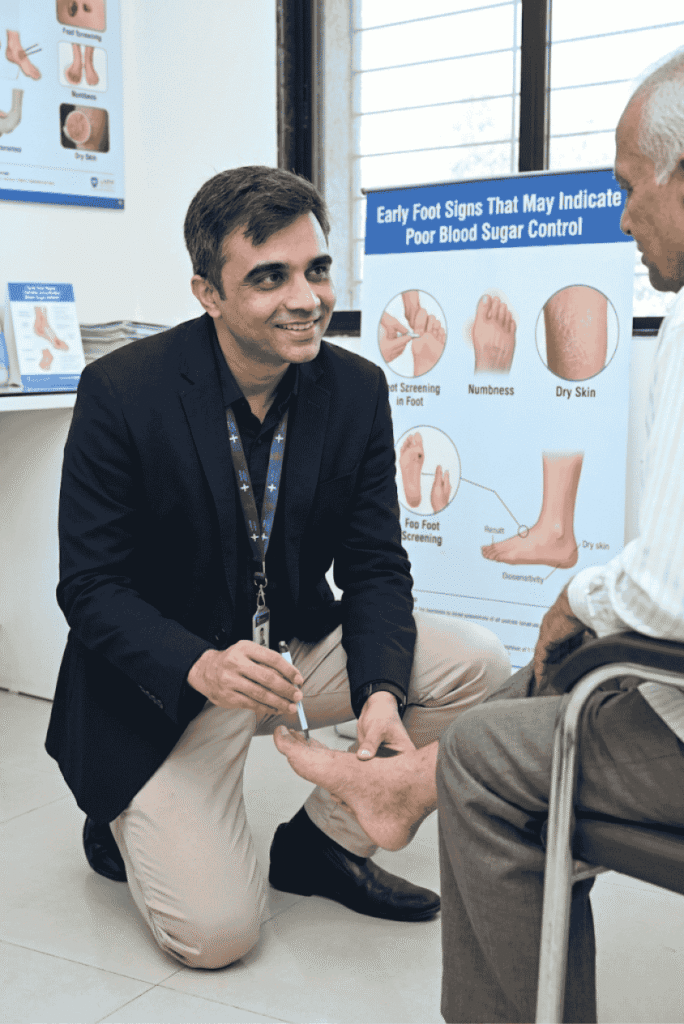
How Diabetes Affects Your Feet
High blood sugar levels can gradually damage both nerves and blood vessels. This condition is known as diabetic neuropathy and peripheral vascular disease. When nerves are affected, sensation in the feet reduces, making it difficult to feel pain, heat, or injuries. At the same time, poor blood circulation slows down healing, increasing the risk of infections.
Because of these changes, even small cuts or blisters can turn into major problems if ignored.
Early Foot Signs You Should Never Ignore
- Numbness or Tingling Sensation
One of the first warning signs is a “pins and needles” feeling or reduced sensation in the feet. This indicates nerve involvement and should not be ignored. - Burning or Sharp Pain in Feet
Some people experience burning pain, especially at night. This may indicate progressing nerve damage. - Cuts or Wounds That Heal Slowly
Even minor injuries taking longer than usual to heal can signal poor blood circulation and high sugar levels. - Dry, Cracked, or Thick Skin
Changes in skin texture are common in uncontrolled diabetes due to reduced sweat and oil production. - Changes in Skin Color or Temperature
Feet may appear unusually pale, reddish, or feel colder than normal due to circulation issues. - Swelling or Unusual Discomfort
Persistent swelling or heaviness in the feet can indicate underlying vascular problems.
What These Signs Mean for Your Diabetes Control
When foot symptoms appear, they often reflect how well your blood sugar is being managed. Frequent numbness, slow healing, or infections may indicate long-term uncontrolled diabetes. These symptoms are not just local issues, they are signals that the entire body may be affected.
Recognizing these early can help in adjusting lifestyle, medication, and overall diabetes management before complications progress.
Why Early Attention to Foot Symptoms is Important
Ignoring early foot signs can lead to serious complications such as ulcers, deep infections, or in severe cases, tissue damage.
Early detection helps in:
- Preventing infection spread
- Improving healing time
- Avoiding hospitalization
- Reducing risk of long-term disability
Timely medical attention can make a major difference in outcomes.
If symptoms persist or worsen, seeking diabetic foot treatment can help ensure proper diagnosis, wound care, and prevention of further complications.
Medical Evaluation and Care Approach
When you consult a specialist, a detailed foot examination is usually performed. This may include:
- Nerve Function Testing
To check sensation and detect neuropathy early. - Blood Circulation Assessment
To understand how well blood is flowing to the feet. - Wound and Infection Evaluation
To identify any hidden or developing ulcers.
Early and accurate evaluation helps in creating an effective treatment plan.
Treatment Options for Diabetic Foot Concerns
- Wound Care and Dressing Management
Proper cleaning and dressing help prevent infection and promote healing. - Blood Sugar Control
Managing glucose levels is essential for preventing further nerve and vessel damage. - Infection Control Therapy
Antibiotics or medical procedures may be required depending on severity. - Advanced Care in Severe Cases
In some cases, surgical intervention may be needed to remove infected tissue and restore foot health.
Advanced diabetic foot treatment focuses on preventing complications and improving long-term foot health outcomes.
Simple Daily Foot Care Tips:
- Inspect Your Feet Daily
Check for cuts, blisters, or color changes regularly. - Keep Feet Clean and Moisturized
Prevents dryness and cracking of skin. - Wear Comfortable Footwear
Avoid tight shoes that can cause pressure or injury. - Avoid Walking Barefoot
Even small injuries can become serious in diabetes.
Conclusion
Your feet can provide early and valuable clues about your blood sugar control. Numbness, slow healing wounds, and skin changes are not just minor issues; they are warning signs that should not be ignored. With early awareness, proper care, and timely medical attention, most complications can be prevented.
Listening to your feet today can help protect your health tomorrow.