
How Do I Know If I Have Varicose Veins or Spider Veins?
Dr Krunal Gohil
Noticing unusual veins on your legs can make you wonder whether they are simply visible veins, spider veins, or something that needs medical attention. Varicose veins and spider veins can look similar at first, but they are not exactly the same. Understanding their appearance and the symptoms they may cause can help you know when it is worth getting them checked.
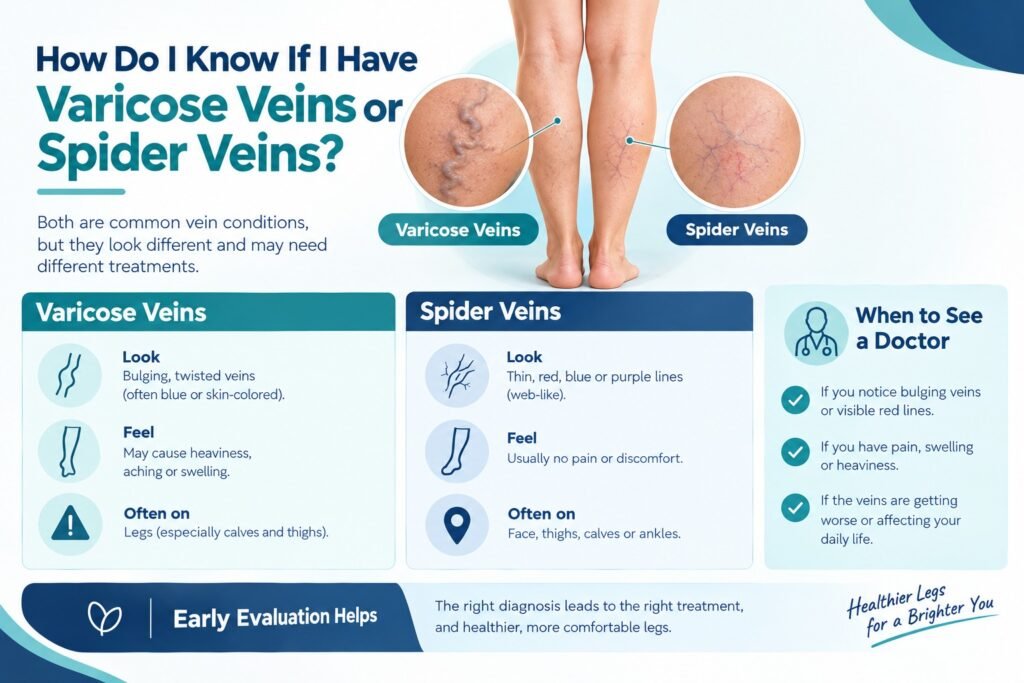
Start With How the Veins Look
One of the easiest ways to notice the difference is by looking at the size, colour, and shape of the veins.
Spider Veins Are Small and Web-Like
Spider veins are usually thin, red, blue, or purple lines that appear close to the surface of the skin. They may form patterns that look like small branches or webs and are commonly seen on the thighs, calves, ankles, or other parts of the legs.
They are often mainly a visible concern, although some people may experience mild discomfort or aching around the affected area.
Varicose Veins Are Larger and More Raised
Varicose veins tend to be larger, twisted, and more noticeable. They may appear blue or purple and can look like cords or ropes beneath the skin. Unlike spider veins, they can become raised or bulging, particularly after standing for a long time.
Varicose veins may also be associated with symptoms such as heaviness, aching, swelling, itching, burning, or leg cramps.
Your Symptoms May Give You More Clues
Appearance alone does not always tell the complete story. Pay attention to how your legs feel, especially after standing, walking, or sitting for several hours.
You may notice:
- A heavy or tired feeling in the legs
- Swelling around the ankles
- Aching or throbbing
- Itching near visible veins
- Night-time leg cramps
- Skin colour or texture changes
When visible veins are accompanied by ongoing symptoms, consulting a varicose veins specialist can help determine whether there is an underlying vein problem that needs attention.
Spider Veins and Varicose Veins Can Occur Together
It is possible to have both spider veins and varicose veins at the same time. In some cases, smaller visible veins may be associated with changes in the deeper veins of the leg.
This is why simply judging the veins by appearance may not always be enough. The symptoms, physical examination, and overall circulation of the leg should also be considered.
When Should You Get Your Veins Checked?
Not every visible vein requires medical treatment. However, an evaluation is worth considering when the veins are becoming more prominent or are accompanied by persistent discomfort.
You should pay closer attention if you notice increasing swelling, frequent pain, skin changes, tenderness, or symptoms that interfere with your daily activities. Sudden or significant changes should also be assessed without delay.
A vascular doctor can examine the affected area and decide whether further testing is appropriate.
How Can a Vascular Doctor Identify the Problem?
The evaluation usually begins with a discussion of your symptoms and a physical examination. The doctor may look at the veins while you are standing to understand how they appear under normal pressure.
When needed, a Doppler ultrasound may be recommended. This non-invasive test helps assess blood flow through the veins and can identify problems such as abnormal blood flow or valve dysfunction.
The results help determine whether the visible veins are mainly superficial or whether there is a deeper venous issue that requires attention.
Does Every Visible Vein Need Treatment?
No. The need for varicose veins treatment depends on the type of vein problem, symptoms, examination findings, and how much the condition is affecting your daily life.
Some people may only need observation and lifestyle measures. Regular walking, avoiding prolonged sitting or standing, maintaining a healthy weight, and elevating the legs when appropriate may support better circulation. In selected cases, a doctor may also recommend compression therapy.
When symptoms are significant or the veins are causing complications, suitable medical or minimally invasive treatment may be considered based on the individual condition.
Know What Your Veins Are Telling You
Spider veins and varicose veins can both appear on the legs, but their size, appearance, and associated symptoms can be different. Paying attention to changes in your veins and how your legs feel can help you recognize when professional evaluation may be useful.
A proper assessment can identify the cause and help determine whether monitoring, lifestyle changes, or varicose veins treatment is appropriate for your condition.
Gangrene should always be treated as a serious medical condition. Amputation is not inevitable in every case, but the chance of preserving healthy tissue depends greatly on the extent of damage, blood supply, infection, and how quickly treatment begins. Prompt evaluation can help identify the cause and determine the most appropriate approach for protecting the affected limb.