
How to Prevent Leg Ulcers in Elderly People?
Dr Krunal Gohil
Leg ulcers are open sores that usually develop on the lower legs or feet and can take weeks or even months to heal. They are more common in older adults because aging often affects blood circulation, skin health, and the body’s natural healing process. While these wounds can become serious if left untreated, many cases can be prevented with proper care, early attention, and healthy lifestyle habits. Understanding the risk factors is the first step toward protecting your leg health.
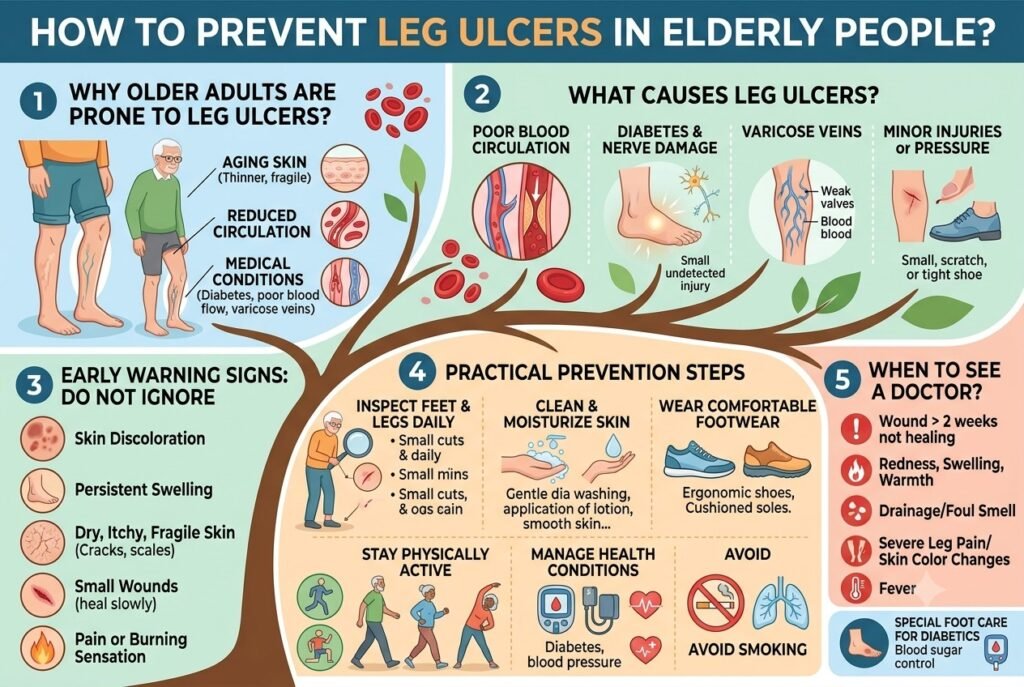
Why Older Adults Are More Prone to Leg Ulcers?
As we age, blood circulation gradually slows down, and the skin becomes thinner and more fragile. This makes it easier for minor cuts, pressure injuries, or blisters to develop into chronic wounds.
Certain medical conditions further increase the risk, including diabetes, poor blood circulation, varicose veins, and reduced mobility. Identifying these risk factors early allows preventive measures to be taken before ulcers develop.
What Causes Leg Ulcers to Develop?
- Poor Blood Circulation
Healthy blood flow delivers oxygen and nutrients that help the skin repair itself. Reduced circulation can delay healing, allowing small wounds to become larger ulcers. - Diabetes and Nerve Damage
Diabetes can damage the nerves in the feet, reducing sensation. As a result, minor injuries may go unnoticed and worsen over time. - Varicose Veins and Venous Disorders
Weak vein valves can cause blood to pool in the legs, increasing pressure and affecting skin health. - Minor Injuries or Constant Pressure
Even a small cut, scratch, or prolonged pressure from poorly fitting footwear can develop into a non-healing wound if not managed properly. - Early Warning Signs You Should Never Ignore
Recognizing early changes can help prevent serious complications. - Skin Discoloration
Red, brown, or dark patches on the legs may indicate circulation problems. - Persistent Swelling
Swollen legs or ankles may be a sign of poor blood flow or vein disease. - Dry, Itchy, or Fragile Skin
Skin that cracks easily becomes more vulnerable to infection. - Small Wounds That Heal Slowly
Cuts or blisters that do not improve within a few days should be evaluated. - Pain or Burning Sensation
Persistent discomfort around the legs or feet may indicate an underlying vascular problem. - Practical Ways to Prevent Leg Ulcers
Simple daily habits can significantly reduce the risk of leg ulcers. - Inspect Your Feet and Legs Every Day
Check for cuts, blisters, redness, swelling, or skin colour changes, especially if you have diabetes. - Keep Your Skin Clean and Moisturized
Wash your legs gently, dry them thoroughly, and use a moisturizer to prevent dryness and cracking. - Wear Comfortable Footwear
Choose properly fitting shoes that protect your feet from pressure and injury. - Stay Physically Active
Regular walking and light exercise help improve blood circulation and support healthy blood vessels. - Manage Chronic Health Conditions
Keeping diabetes, blood pressure, and cholesterol under control helps maintain healthy circulation and reduces the risk of ulcers. - Avoid Smoking
Smoking damages blood vessels and slows wound healing, increasing the likelihood of vascular complications.
Why Regular Vascular Check-ups Are Important?
Many circulation problems develop gradually without causing noticeable symptoms in the early stages. Regular evaluations by a vascular doctor can identify reduced blood flow before it leads to chronic wounds or leg ulcers.
Tests such as Doppler ultrasound or vascular assessment help detect circulation problems early, allowing treatment before complications occur.
Special Foot Care for People with Diabetes:
People with diabetes need extra attention because even minor foot injuries can progress quickly.
Check Your Feet Daily
Look for cuts, blisters, redness, or swelling.
Treat Small Injuries Promptly
Clean and protect even minor wounds to prevent infection.
Maintain Good Blood Sugar Control
Well-controlled diabetes supports better circulation and faster healing.
Seek Expert Care When Needed:
If a wound does not heal, becomes painful, or shows signs of infection, consulting a diabetic foot specialist at the earliest can help prevent more serious complications.
When Should You See a Doctor?
Seek medical attention if you notice:
- A wound that does not heal within two weeks
- Increasing redness, swelling, or warmth
- Drainage or foul-smelling discharge
- Persistent leg pain or skin colour changes
- Fever or other signs of infection
Early treatment often prevents ulcers from becoming more severe.
Healthy Habits Can Help Prevent Leg Ulcers
Leg ulcers are not an inevitable part of aging. With proper skin care, good blood circulation, regular physical activity, and early attention to warning signs, many ulcers can be prevented. Routine check-ups with a vascular specialist can help identify circulation problems early, while timely care from a diabetic foot specialist is essential for people with diabetes who develop foot wounds.
Taking preventive steps today can protect your mobility, support faster healing, and help you maintain healthy legs for years to come.