
Why Do Your Legs Start Hurting as You Get Older?
Dr Krunal Gohil
As people grow older, occasional aches and pains in the legs may seem like a natural part of aging. However, persistent leg pain should never be dismissed as “just getting older.” In many cases, it may be a sign of reduced blood circulation, nerve problems, or underlying vascular disease that requires medical attention. Identifying the cause early can help prevent serious complications and improve mobility, comfort, and overall quality of life.
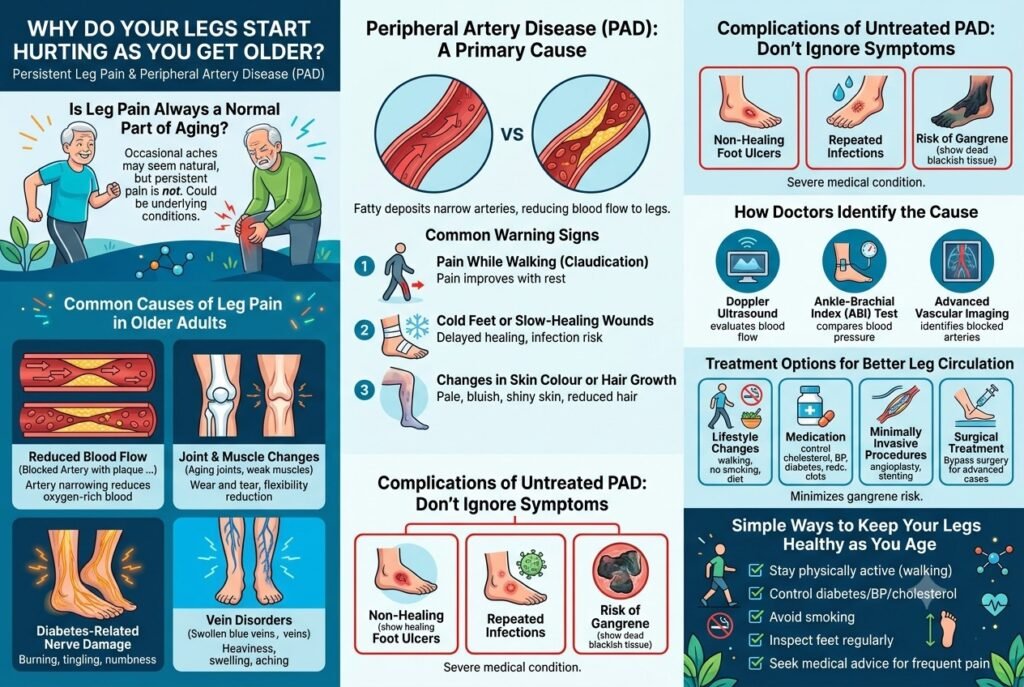
Is Leg Pain Always a Normal Part of Aging?
While muscles and joints naturally undergo wear and tear with age, ongoing leg pain is not considered a normal part of healthy aging. If the pain occurs while walking, keeps returning, or is associated with numbness, cold feet, or slow-healing wounds, it could indicate an underlying circulation problem rather than simple muscle fatigue.
Understanding these warning signs allows timely treatment before the condition becomes more serious.
Common Causes of Leg Pain in Older Adults:
- Reduced Blood Flow to the Legs
One of the leading causes of persistent leg pain is narrowing of the arteries that supply blood to the legs. When muscles do not receive enough oxygen-rich blood, walking or climbing stairs may become painful. - Joint and Muscle Changes
Age-related arthritis, muscle weakness, and reduced flexibility can also contribute to discomfort, especially after prolonged activity. - Diabetes-Related Nerve Damage
People with diabetes may develop nerve damage that causes burning, tingling, or numbness in the legs and feet. - Vein Disorders
Conditions such as varicose veins or chronic venous insufficiency may cause heaviness, swelling, and aching after standing for long periods.
When Leg Pain Could Be a Sign of Peripheral Artery Disease (PAD)
Peripheral Artery Disease (PAD) occurs when fatty deposits narrow the arteries, reducing blood flow to the legs. This condition is more common in older adults, smokers, and people with diabetes, high blood pressure, or high cholesterol.
Common warning signs include:
- Pain While Walking That Improves with Rest
This symptom, known as claudication, is one of the earliest signs of PAD. - Cold Feet or Slow-Healing Wounds
Poor circulation delays healing and increases the risk of infection. - Changes in Skin Colour or Hair Growth
The skin may become pale, bluish, or shiny, and hair growth on the legs may decrease due to reduced blood supply.
Recognizing these symptoms early and seeking PAD treatment can improve blood circulation and help prevent long-term complications.
What Can Happen If Poor Blood Flow Is Left Untreated?
Ignoring circulation problems can allow the condition to progress.
- Non-Healing Foot Ulcers
Small cuts or blisters may fail to heal because the tissues do not receive enough oxygen and nutrients. - Repeated Infections
Poor blood supply reduces the body’s ability to fight infection, making wounds more difficult to treat. - Risk of Gangrene
In severe cases, prolonged loss of blood supply may cause body tissues to die, leading to gangrene. This is a serious medical condition that requires immediate treatment to prevent further tissue damage.
Early diagnosis greatly reduces the chances of developing these advanced complications.
How Doctors Identify the Cause of Leg Pain?
Finding the exact cause of leg pain begins with a thorough medical evaluation.
- Medical History and Physical Examination
Your doctor will ask about your symptoms, walking distance, medical conditions, and lifestyle habits. - Doppler Ultrasound
This painless test evaluates blood flow in the arteries and veins. - Ankle-Brachial Index (ABI) Test
The ABI test compares blood pressure in the arms and legs to detect reduced circulation. - Advanced Vascular Imaging
In selected cases, CT angiography or other imaging tests may be recommended to identify blocked arteries.
Treatment Options for Better Leg Circulation
Treatment depends on the severity of the condition and the underlying cause.
- Lifestyle Changes
Regular walking, smoking cessation, healthy eating, and weight management improve circulation. - Medication
Medicines may help control cholesterol, blood pressure, diabetes, and reduce the risk of blood clots. - Minimally Invasive Procedures
Angioplasty and stenting can restore blood flow in narrowed arteries without major surgery. - Surgical Treatment
Advanced arterial blockages may require bypass surgery to improve circulation.
Timely PAD treatment not only relieves leg pain but also lowers the risk of severe complications, including gangrene.
Simple Ways to Keep Your Legs Healthy as You Age
You can reduce your risk of circulation-related leg problems by following a few healthy habits:
- Stay physically active with regular walking.
- Keep diabetes, blood pressure, and cholesterol under control.
- Avoid smoking or tobacco use.
- Inspect your feet regularly for cuts or colour changes.
- Seek medical advice if leg pain becomes frequent or worsens.
Don't Ignore Persistent Leg Pain
Although occasional discomfort can occur with aging, persistent leg pain should never be considered normal. It may be an early sign of reduced blood circulation or Peripheral Artery Disease, which can progress if left untreated. Seeking timely medical evaluation and appropriate PAD treatment can relieve symptoms, improve mobility, and reduce the risk of serious complications such as gangrene.
Listening to your body and acting early is one of the best ways to protect your vascular health and maintain an active lifestyle as you age.