
How Long Do Results Last After Varicose Vein Treatment?
Dr Krunal Gohil
It is one of the most common questions patients ask before going ahead and it is a completely fair one. You want to know that the time, cost, and recovery are worth it. The honest answer is that results from modern vein procedures are long-lasting for most patients, but lasting results require more than just the procedure itself.
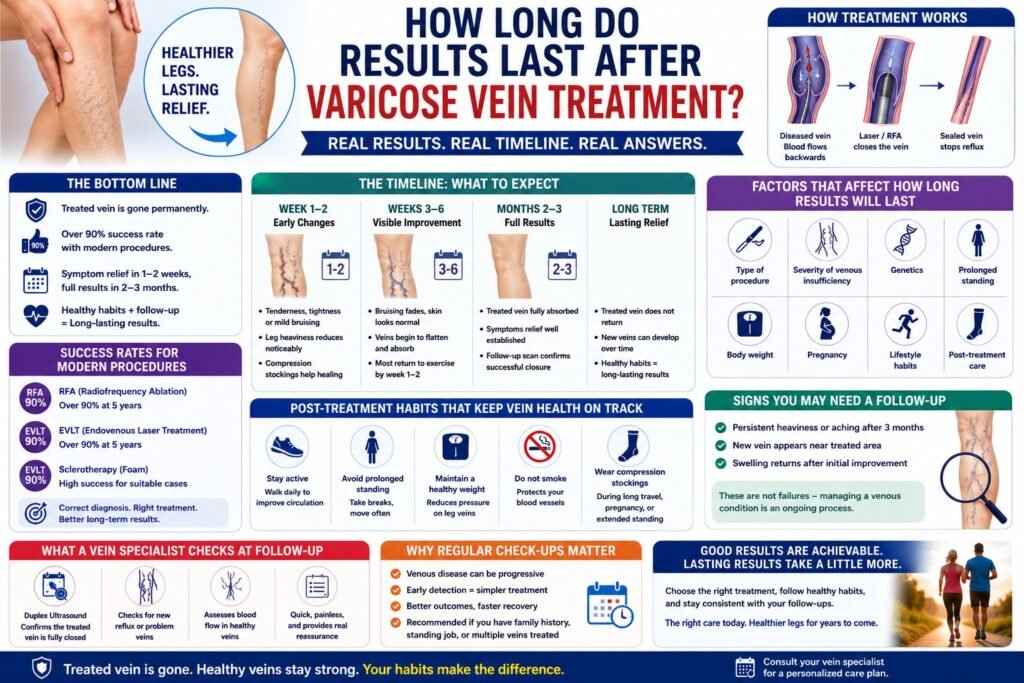
The Old Reputation vs the Reality of Modern Vein Care
Varicose vein treatment used to mean surgery vein stripping under general anaesthesia, a hospital stay, and weeks of recovery. It is no surprise that many patients assumed results from such an invasive process would be permanent. Today’s minimally invasive procedures are very different. They are done in a clinic under local anaesthetic in under an hour, with patients walking out the same day. And while the procedures are far gentler, their long-term outcomes are actually better documented and more reliable than the surgical methods they replaced.
What Results Actually Means: Symptoms vs Appearance
It helps to separate two things patients often group together. Symptom relief the aching, heaviness, swelling, and fatigue in the legs typically improves within the first one to two weeks after treatment. Cosmetic improvement the fading and disappearance of visible veins takes longer, often two to three months as the body gradually absorbs the treated vein. Both are real results, but they arrive on different timelines.
Success Rates for RFA, Laser, and Sclerotherapy
Clinical data on modern vein procedures is reassuring. Radiofrequency ablation (RFA) has a five-year success rate of over 90% in published studies. Endovenous laser treatment (EVLT) shows comparable results. Ultrasound-guided foam sclerotherapy has slightly more variable outcomes depending on vein size and anatomy, but remains highly effective for appropriate cases. The key factor in all of these is correct patient selection and accurate diagnosis which is why the assessment before treatment matters as much as the procedure itself.
Why the Treated Vein Cannot Return But New Ones Can?
Once a vein is successfully closed through ablation or sclerotherapy, it is permanently sealed. The body breaks it down over the following weeks and months, and the treated vein itself does not reopen. However, varicose veins are a condition of the venous system, not just of individual veins. Underlying causes valve weakness, genetics, prolonged standing remain after treatment. This means new veins can develop over time in adjacent areas, particularly if lifestyle factors are not addressed. This is not treatment failure. It is the nature of venous disease.
The Timeline You Can Realistically Expect
Week 1 to 2: Early Changes and What to Expect
In the first two weeks, the treated area may feel tender, tight, or slightly bruised. Some patients notice a cord-like sensation along the vein line as it begins to close this is completely normal. Leg heaviness and aching typically reduce noticeably within this window, often before the visible vein has faded at all. Compression stockings are worn consistently during this phase to support healing and reduce swelling.
Weeks 3 to 6: Visible Improvement Begins
By weeks three to six, the treated vein begins to be absorbed by surrounding tissue. Bruising clears, skin colour normalises, and any visible bulging typically starts to flatten. Most patients find they can return to exercise from around week one or two (depending on the procedure), and the legs begin to feel and look noticeably better during this phase.
Months 2 to 3: What Your Varicose Veins Treatment Has Achieved
By the two to three month mark, the full results of varicose veins treatment are visible. The treated vein has been fully absorbed, the skin surface has settled, and symptom relief is well established. A follow-up ultrasound at this stage confirms that the vein is closed and that blood is routing correctly through healthy vessels. This appointment also identifies any residual veins that may benefit from a second session.
Factors That Decide How Long Your Results Will Last
✔ Type of procedure RFA and laser have higher long-term closure rates than sclerotherapy alone ✔ Severity of venous insufficiency more advanced disease has a higher chance of new vein development ✔ Genetics a strong family history of varicose veins increases long-term recurrence risk ✔ Occupation prolonged standing daily puts ongoing pressure on the venous system ✔ Body weight excess weight increases pressure in leg veins continuously ✔ Pregnancy each pregnancy can trigger or worsen venous insufficiency in susceptible patients ✔ Post-treatment lifestyle patients who stay active and maintain a healthy weight have better long-term outcomes |
Post-Treatment Habits That Keep Vein Health on Track
- Stay active – Regular walking is the single best habit for maintaining healthy venous return.
- Avoid prolonged standing in one position shift weight, use heel raises, and take movement breaks.
- Maintain a healthy body weight reduced pressure on leg veins directly improves long-term outcomes.
- Do not smoke – Smoking impairs circulation and accelerates vascular deterioration.
- Wear compression stockings during long travel, pregnancy, or extended standing days.
When Diet and Hydration Make a Difference?
A diet that supports healthy circulation rich in flavonoids (berries, citrus, leafy greens) and low in excess salt helps reduce inflammation in vein walls over time. Staying well hydrated keeps blood viscosity at a level that supports smooth venous flow. These are not dramatic changes, but consistently applied they contribute to keeping the remaining healthy veins in good condition long after treatment.
Signs That a Follow-Up or Second Session May Be Needed
Some patients require more than one treatment session, particularly if they had multiple affected veins or if the initial procedure treated a large segment of vein. Signs that a return visit is worthwhile include: persistent heaviness or aching after three months, a visible new vein appearing near the treated area, or swelling that returns after initially improving. These are not failures they are normal parts of managing a chronic venous condition.
What a Varicose Veins Doctor Checks at Follow-Up
A varicose veins doctor will typically arrange a follow-up duplex ultrasound six to twelve weeks after the procedure. This scan confirms that the treated vein is fully closed, checks for any early signs of new reflux, and assesses blood flow through the surrounding healthy veins. It is a quick, painless scan that provides real clinical reassurance not just a tick-box appointment.
Why Seeing a Vascular Doctor Regularly Is the Best Long-Term Strategy
Venous insufficiency is a progressive condition in susceptible individuals. Seeing a vascular doctor for periodic check-ups particularly if you have a strong family history, work in a standing occupation, or have had multiple veins treated allows early identification of new problem areas before they become symptomatic. Catching a new vein at an early stage means simpler treatment, faster recovery, and better long-term results.
Good Results Are Achievable Lasting Results Take a Little More
Modern varicose vein procedures deliver excellent long-term outcomes for the majority of patients. The treated vein is gone permanently. Symptom relief is often dramatic. Cosmetic improvement is real and significant. What determines how long those results last is a combination of the quality of the initial treatment, the accuracy of the follow-up, and the everyday habits that either support or stress the venous system over time.
The best approach is not a single procedure and a hope. It is a good procedure, done by the right varicose veins doctor, followed by sensible habits and periodic review. That combination gives most patients results that last not just for months but for many years.