
Why Is My Foot Wound Not Healing? The Answer Every Diabetic Patient Deserves to Know
Dr Krunal Gohil
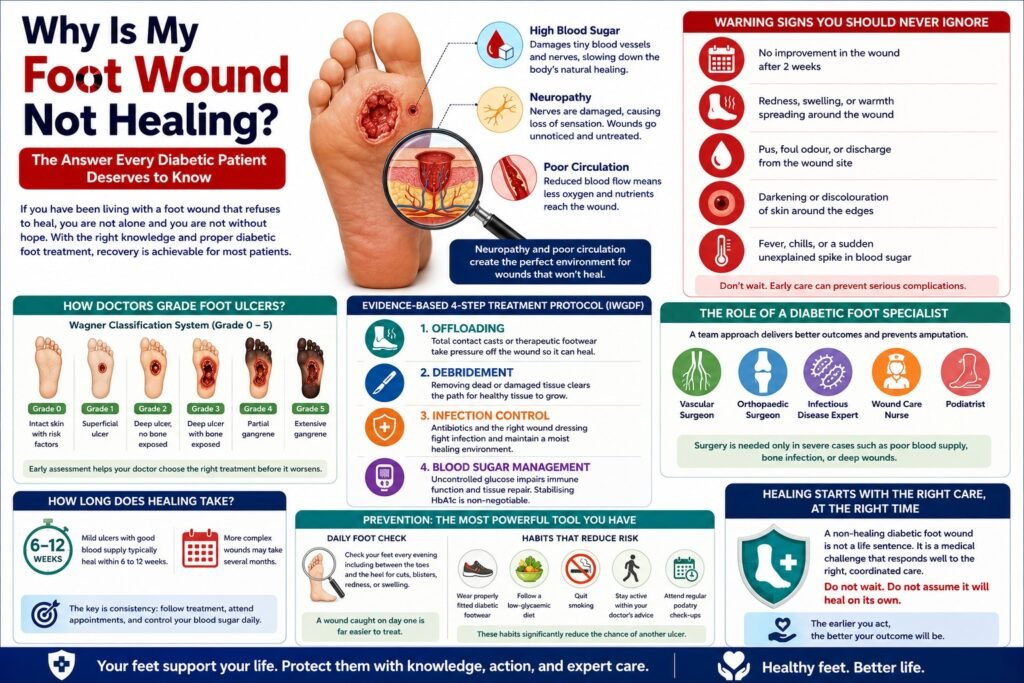
If you have been living with a foot wound that refuses to heal, you are not alone and you are not without hope. With the right knowledge and proper diabetic foot treatment, recovery is achievable for most patients.
The Silent Danger Most Diabetic Patients Overlook
How High Blood Sugar Quietly Destroys Your Foot's Ability to Heal
Consistently elevated glucose damages the tiny blood vessels and nerves in your feet. When a wound forms even a minor blister your body struggles to send the healing signals it needs. White blood cells move slowly, new tissue forms poorly, and the wound lingers for weeks or months.
Neuropathy and Poor Circulation: The Double Trouble Behind Chronic Wounds
Diabetic neuropathy means your feet cannot feel pain so wounds go unnoticed until they are already infected. Add peripheral arterial disease reduced blood flow to the feet and even a small cut can rapidly become a serious ulcer. Together, these two conditions create the perfect environment for a wound that will not heal on its own.
Recognising a Wound That Needs Immediate Attention
Warning Signs You Should Never Ignore
Seek professional care without delay if you notice any of the following:
🔴 No improvement in the wound after 2 weeks
🔴 Redness, swelling, or warmth spreading around the wound
🔴 Pus, foul odour, or discharge from the wound site
🔴 Darkening or discolouration of skin around the edges
🔴 Fever, chills, or a sudden unexplained spike in blood sugar
How Doctors Grade the Severity of Foot Ulcers
Doctors use the Wagner Classification System Grade 0 (intact skin with risk factors) to Grade 5 (extensive gangrene) to assess wound depth and recommend the right diabetic foot treatment plan before the condition progresses.
What Evidence-Based Treatment Actually Looks Like
International guidelines from the IWGDF outline a clear four-step protocol:
- Offloading — Total contact casts or therapeutic footwear take pressure off the wound so fragile new tissue can form.
- Debridement — Removing dead or damaged tissue clears the path for healthy tissue to grow. Done regularly at clinic visits.
- Infection Control — Antibiotics and the right wound dressing maintain a moist healing environment and fight bacteria.
- Blood Sugar Management — Uncontrolled glucose impairs immune function and tissue repair. Stabilising HbA1c is non-negotiable.
The Role of a Diabetic Foot Specialist in Your Recovery
Diabetic foot wounds are too complex for any single doctor to manage alone. A dedicated diabetic foot specialist coordinates a team vascular surgeons, orthopaedic surgeons, infectious disease doctors, and wound care nurses to address every layer of the problem. This team approach delivers better outcomes, fewer complications, and in most cases, prevents amputation entirely.
Surgery becomes necessary only when blood supply is critically reduced, bone is infected, or the wound is too deep for conservative care. Early intervention with the right specialist dramatically reduces how far the condition needs to progress before it can be reversed.
How Long Does Healing Take?
Mild ulcers with good blood supply typically heal within 6 to 12 weeks. More complex wounds those involving infection or poor circulation may take several months. The key is not speed but consistency: attending every appointment, following offloading instructions, and maintaining blood sugar control every single day.
Prevention: The Most Powerful Tool You Already Have
Your Daily Foot Check
Because neuropathy removes pain as a warning signal, your eyes become your early detection system. Every evening, inspect the entire surface of both feet including between the toes and the heel for cuts, blisters, redness, or swelling. A wound caught on day one is far easier to treat than one caught on day fourteen.
Habits That Reduce the Risk of a Wound Returning
Always wear properly fitted diabetic footwear never go barefoot. Maintain a low-glycaemic diet, quit smoking, stay active within your doctor’s guidance, and attend regular podiatry check-ups. These habits significantly reduce the chance of another ulcer forming after healing.
Healing Starts With the Right Care, at the Right Time
A non-healing diabetic foot wound is not a life sentence it is a medical challenge that responds well to the right, coordinated care. Whether your wound is fresh or has been present for months, reaching out to a qualified diabetic foot specialist and following evidence-based treatment guidelines gives you the strongest possible chance of full recovery.
Do not wait. Do not assume it will heal on its own. The earlier you act, the better your outcome will be.