
Blackening Toes and Foot Pain - The Artery Connection Nobody Talks About
Dr Krunal Gohil
Most people assume dark or discoloured toes are a skin problem. Maybe a bruise, maybe a fungal infection, maybe just poor footwear. But in many cases, what is happening on the surface of your foot is actually a reflection of something much deeper a blockage quietly building inside your arteries.
The connection between artery health and foot symptoms is one of the most overlooked areas in everyday healthcare. And ignoring it can have serious consequences.
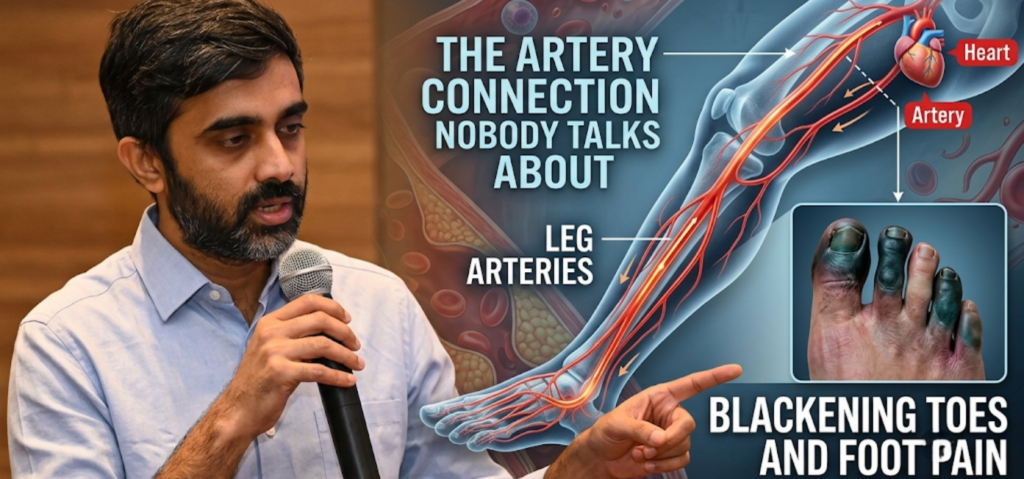
A Warning Your Body Writes on Your Skin
Your skin does not lie. When blood cannot reach the tissues of your foot in adequate amounts, the body begins to show it through colour changes, pain, slow healing, and in severe cases, tissue that starts to die. Blackening of the toes is not a cosmetic issue. It is a circulation crisis that begins far upstream, inside your arteries.
Understanding this connection early can be the difference between a treatable condition and an irreversible one.
How a Blocked Artery Slowly Starves Your Foot of Blood?
Arteries carry oxygen-rich blood to every part of your body. When fatty deposits called plaque accumulate on the inner walls of these vessels, they narrow the passage available for blood to flow. Over time, this narrowing restricts circulation and the areas furthest from the heart, like the feet and toes, feel it first and most severely.
Plaque, Narrowing, and the Domino Effect on Circulation
The process begins silently. Plaque builds up over years driven by high cholesterol, smoking, diabetes, and high blood pressure. As the artery narrows, blood flow reduces. Muscles and tissues that depend on that blood begin to receive less oxygen. At first, this causes discomfort. Left unaddressed, it causes damage.
Why the Foot and Toes Show Damage First?
The arteries supplying the feet are the smallest and most distant in the lower limb. They are the last to receive blood and the first to show the effects of reduced flow. When circulation is compromised, the toes being the very tip of this system begin to turn pale, then blue, then in severe cases, black. This blackening indicates tissue death, a condition known medically as gangrene.
From Dull Pain to Darkened Skin - Stages You Should Never Overlook
Arterial blockage does not go from zero to critical overnight. It progresses in stages, each with its own signals.
Early Signs: Cramping, Coldness, and Poor Wound Healing
Early warning signs include cramping in the calf or foot during walking that eases with rest, one foot feeling noticeably colder than the other, numbness or tingling in the toes, and small cuts or sores on the foot that simply refuse to heal. These are not random inconveniences they are the body’s earliest requests for help.
When Toes Start to Blacken - What Is Actually Happening Inside
Blackening of one or more toes signals that blood supply has been severely cut off for long enough that tissue has begun to die. At this stage, the situation is urgent. Without intervention, infection can spread rapidly, and in worst-case scenarios, amputation becomes necessary to prevent further damage.
Restoring Blood Flow: What Modern Arterial Treatment Looks Like
The encouraging reality is that arterial treatment today is far more advanced and less invasive than most people expect. Caught at the right stage, the condition is very much manageable.
Non-Surgical Options That Work in Early Stages
When blockage is detected early, a structured approach combining supervised walking programmes, medications to improve blood flow and prevent clotting, and strict management of risk factors like diabetes and cholesterol can meaningfully slow or halt progression.
Procedures That Open Blocked Arteries and Save Limbs
For more advanced blockage, vascular specialists may recommend angioplasty a minimally invasive procedure where a small balloon is used to widen the narrowed artery or the placement of a stent to keep the vessel open. In cases where the blockage is more extensive, a bypass surgery creates a new route for blood to travel around the affected segment. These interventions, when performed in time, restore circulation and in many cases save the limb entirely.
Who Is Most at Risk and How to Stay Ahead of It
Conditions That Speed Up Arterial Blockage
Diabetes is one of the strongest risk factors it damages blood vessels and impairs the body’s ability to detect pain, meaning symptoms often go unnoticed longer. Smoking, high blood pressure, high cholesterol, obesity, and a sedentary lifestyle all accelerate plaque formation and artery narrowing significantly.
Simple Habits That Keep Your Arteries Open Longer
Regular physical activity, even brisk walking for 30 minutes a day, keeps circulation active. A diet low in saturated fat and rich in fibre supports artery health over time. Quitting smoking remains one of the single most impactful changes a person can make. And for anyone with diabetes, daily foot inspection is not optional it is essential.
Do Not Wait for the Skin to Tell You What the Artery Already Knows
By the time toes begin to darken, the blockage inside the artery has often been developing for years. The skin is simply the last one to speak the artery has been struggling long before that.
If you or someone you know is experiencing persistent foot pain, cold or discoloured toes, or wounds on the feet that will not heal, do not dismiss it as a skin issue or an age-related ache. Speak to a vascular specialist. The earlier the assessment, the better the outcome and in many cases, the limb.